
Marble Canyons and Sacred Waters: Unveiling the Charm of Jabalpur, Madhya Pradesh, India
Few travel destinations in central India balance primal geological drama and sacred antiquity quite like Jabalpur, Madhya Pradesh, India. Flanked by the life-giving waters of the Holy Narmada River, this storied cultural bastion has quietly transformed from an ancient administrative seat of the Kalachuri and Gond dynasties into one of India’s most compelling travel hubs. For centuries, pilgrims, geologists, and globetrotters have ventured here to witness sheer white limestone cliffs slicing through jade waters, ancient hilltop citadels defying gravity, and centuries-old tantric temples standing sentinel over quiet river bends.
Often referred to as the cultural capital of Madhya Pradesh (Sanskardhani), Jabalpur possesses an easygoing charm that stands in stark contrast to crowded commercial metros. Whether you find yourself drifting down quiet river gorges illuminated solely by the silvery light of a full moon or listening to the deafening roar of roaring white water cascading over jagged rock shelves, the city serves up an intoxicating blend of natural wonders and heritage treasures. Finding the best places to visit in Jabalpur means stepping off the hurried tourist trail and immersing yourself in a landscape woven with mythology, colonial curiosities, wildlife habitats, and profound geological mysteries.
If you are planning an expedition to central India, this comprehensive guide spotlights the top tourist places in Jabalpur that merit a definitive spot on your itinerary. From world-renowned river gorges to forgotten hilltop strongholds, prepare to discover the raw, understated soul of Madhya Pradesh through five extraordinary locations.
Table of Contents
- 1. Bhedaghat Marble Rocks
- 2. Dhuandhar Waterfall
- 3. Chausath Yogini Temple
- 4. Madan Mahal Fort and Balancing Rock
- 5. Dumna Nature Reserve Park
- Best Time to Visit Jabalpur
- How to Reach Jabalpur
- Local Culinary Delights
- Essential Travel Tips for Visitors
- Suggested 2-Day Jabalpur Itinerary
- Frequently Asked Questions
- Conclusion
1. Bhedaghat Marble Rocks

Overview
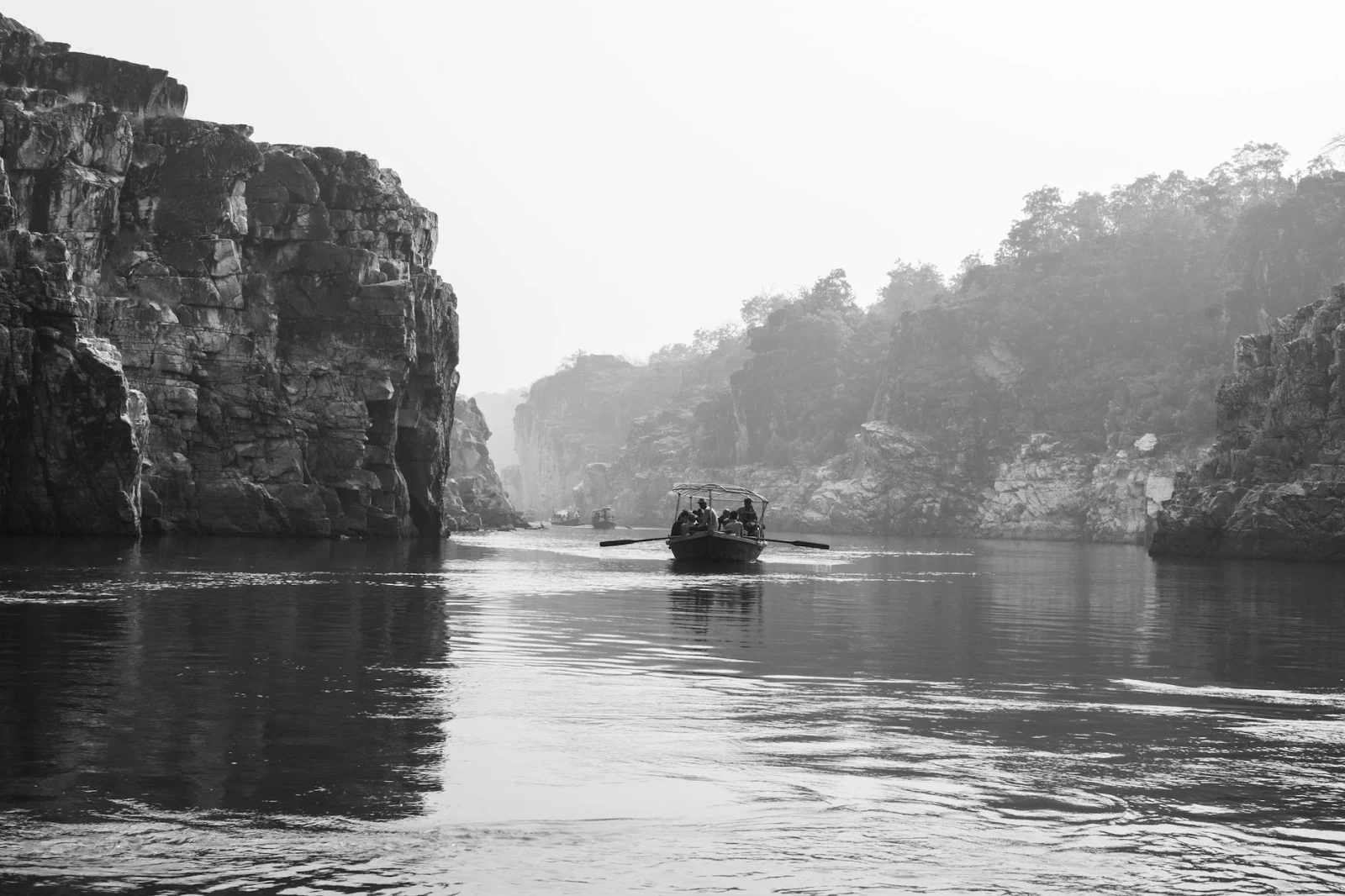
Situated roughly 25 kilometres downstream from the city centre, the Marble Rocks at Bhedaghat represent one of the most stunning geological formations in Asia. Here, the holy Narmada River cuts through a slender, three-kilometre canyon flanked by towering magnesium limestone cliffs reaching heights of over a hundred feet. Over millennia, the relentless current has carved the soft white, pale pink, and deep grey stone into sculptural masterpieces, sheer cliffs, and jagged pinnacles that shimmer brilliantly under the afternoon sun.
Why Visit
Bhedaghat is globally acclaimed as one of the best places to visit in Jabalpur. Experiencing the sheer scale of the marble canyons from the water level is an unforgettable, almost ethereal sensory journey. The canyon walls shift their shades depending on the sun’s angle—glowing stark white at noon, honey-gold at sundown, and an otherworldly, ghostly luminescence during Sharad Purnima (the full moon night of autumn). Local boatmen add to the enchantment by reciting rhyming folk poetry and local legends in lively Hindi cadences as they steer rowboats through narrow rock corridors.
Key Attractions & Activities
- Guided Boat Rides: Board a shared or private wooden rowboat from Panchvati Ghat and glide down the canyon between November and May.
- Full Moon Night Boating: Available on the night of the full moon and two nights before and after, offering a surreal moonlit vista of the gleaming marble walls.
- Bandar Kudani: A famous canyon narrows where the cliff faces approach so closely that monkeys can effortlessly leap across the gorge.
- Marble Souvenir Shopping: Browse the bustling ghat bazaar for hand-carved soapstone and marble mementos, shivlings, and intricately filigreed lamps.
Timings & Entry Fee
- Timings: Boating operates daily from 7:00 AM to 7:00 PM (subject to river levels; closed during the monsoon season from July to mid-October). Full moon night boating runs from 8:00 PM to midnight.
- Entry Fee: No charge to enter Panchvati Ghat. Shared boat rides cost around ₹100–₹150 per person; private rowboats range between ₹800 and ₹1,500 depending on duration and passenger capacity. Night boating carries a premium ticket of around ₹300 per head.
Best Time to Explore
The ideal window runs from November to March when daytime temperatures are pleasantly cool and the river is placid. The ultimate spectacle occurs during the Sharad Purnima festival (October/November), when nocturnal boat tours draw travelers from around the globe.
2. Dhuandhar Waterfall
Overview
A short distance from the quiet canyons of Bhedaghat, the Narmada River abruptly alters its demeanor. Here, the wide river narrows sharply and plunges over a 30-meter vertical drop of rugged rock shelves, generating a deafening acoustic roar and an immense column of fine spray. Fittingly named ‘Dhuandhar’—a compound of the Hindi words Dhuan (smoke) and Dhar (flow)—the falls produce a perpetual cloud of mist that hovers permanently above the churning chasm.
Why Visit
Dhuandhar Waterfall is undisputedly one of the top tourist places in Jabalpur, capturing the raw, untamed velocity of central India’s most revered river. Standing on the viewing galleries constructed along both riverbanks, you can physically feel the reverberations of millions of gallons of water crashing into the gorge every minute. The visual juxtaposition of the foaming white plunge pool against the pale sedimentary outcrops makes it a prime haven for landscape photographers and nature enthusiasts alike.
Key Attractions & Activities
- Aerial Ropeway (Cable Car): Hop onto the cable car connecting the eastern and western banks of the Narmada for a panoramic bird’s-eye perspective of the falls and the surrounding rift valley.
- Riverside Promenades: Walk along well-paved, barricaded viewing decks that allow visitors to get within meters of the water's roaring brink safely.
- Sunset Gazing: Watch the setting sun cast iridescent golden and orange tints across the spray clouds, frequently creating vibrant late-afternoon rainbows across the plunge basin.
Timings & Entry Fee
- Timings: Open all days from 6:00 AM to 8:00 PM. The ropeway operates between 10:00 AM and 6:00 PM (with a brief lunchtime pause).
- Entry Fee: Entry to the falls is free. The round-trip cable car ride costs approximately ₹100 to ₹120 per person.
Best Time to Explore
While the waterfall can be visited throughout the year, the post-monsoon months of September through December showcase the cascade at its highest volume, enveloped in colossal clouds of spray. Late afternoons are especially scenic as the sunlight strikes the mist at acute angles to produce brilliant rainbows.
3. Chausath Yogini Temple

Overview
Perched high atop a rocky plateau overlooking the Narmada river valley near Bhedaghat, the Chausath Yogini Temple is one of India's few surviving shrines dedicated to the esoteric tantric cult of the 64 Yoginis. Constructed in the 10th century CE under the patronage of the Kalachuri rulers, this hypaethral (open-to-the-sky) circular stone temple requires visitors to climb 150 stone steps. Inside its circular perimeter wall, an expansive courtyard houses 64 peripheral shrines, alongside a central sanctum dedicated to Lord Shiva and Goddess Parvati seated upon Nandi.
Why Visit
Stepping into this monument is an exercise in pure historical immersion. Unlike standard multi-tiered Nagara-style temples, the circular cloister design reflects an archaic tantric architectural scheme intended for open-air rituals and celestial energy alignment. Despite suffering desecration during later medieval invasions, each exquisitely carved granite idol of the Yoginis displays distinctive yogic postures, animal mounts, and divine attributes. The site's elevated location also rewards travelers with one of the finest vantage points over the surrounding forested countryside and the meandering Narmada river.
Key Attractions & Activities
- The 64 Yogini Idols: Study the intricate, highly individualized Kalachuri stone carvings of female divinities, each depicting unique expressions, hairstyles, and symbolic animal vehicles.
- Central Gauri-Shankar Mandir: Marvel at the rare sanctum idol portraying Lord Shiva and his consort Parvati riding together on the bull Nandi, installed around the 12th century by Queen Alhanadevi.
- Panoramic River Views: Absorb breathtaking sweeps of the Narmada river winding its way through the verdant landscape far below the hillcrest.
Timings & Entry Fee
- Timings: Open daily from sunrise to sunset (typically 7:00 AM to 6:30 PM).
- Entry Fee: Admission is free. Modest shoe-minding and donation options are available on-site.
Best Time to Explore
Early morning hours or late afternoons between October and March are best. Visiting early lets you ascend the stone staircase in cool weather, avoid tour groups, and enjoy uninterrupted quiet in the sanctum.
4. Madan Mahal Fort and Balancing Rock

Overview
Crowning an imposing granite hill in the south-western sector of Jabalpur city stands the rugged Madan Mahal Fort. Built in 1116 CE by the Gond ruler Raja Madan Shah, this compact military outpost was later fortified by the legendary warrior queen Rani Durgavati, who made it a strategic lookout tower to defend her kingdom against Mughal incursions. At the base of this rocky spur rests another curiosity: the Balancing Rock, a geological wonder where a massive boulder sits perched precariously on a smooth rock slope with only a tiny point of contact.
Why Visit
Madan Mahal Fort stands as a proud testament to the Gondwana dynasty that once ruled central India with unyielding tenacity. The fort itself is remarkably compact, functioning less as a luxury palace and more as a hardened tactical watchtower, royal stables, and battle command post carved seamlessly into the granite hill. The Balancing Rock at the hill's base is an intriguing geological anomaly that has withstood earthquakes—including the devastating 6.0 magnitude temblor of 1997—without shifting an inch, making it a must-visit curiosity.
Key Attractions & Activities
- The Fort Ramparts: Walk through ancient watchtowers, hidden passages, and royal chambers that command sweeping views over modern Jabalpur.
- The Balancing Rock: Examine the inexplicable equilibrium of the upper boulder, marveling at the geological processes of spheroidal weathering.
- Sharda Devi Temple: A revered ancient hill shrine located nearby, frequented by locals during festive mornings.
- Heritage Hiking: Trek the granite trails leading up to the fortress, popular among morning fitness enthusiasts and history lovers.
Timings & Entry Fee
- Timings: 7:00 AM to 6:30 PM, seven days a week.
- Entry Fee: Entry is free for both Madan Mahal Fort and the Balancing Rock.
Best Time to Explore
Visit between October and February, during the golden hours of sunrise or an hour before sunset. Climbing the granite hill in the middle of a hot summer day can be arduous, so early mornings offer the most comfortable temperatures and clearest light for photography.
5. Dumna Nature Reserve Park

Overview
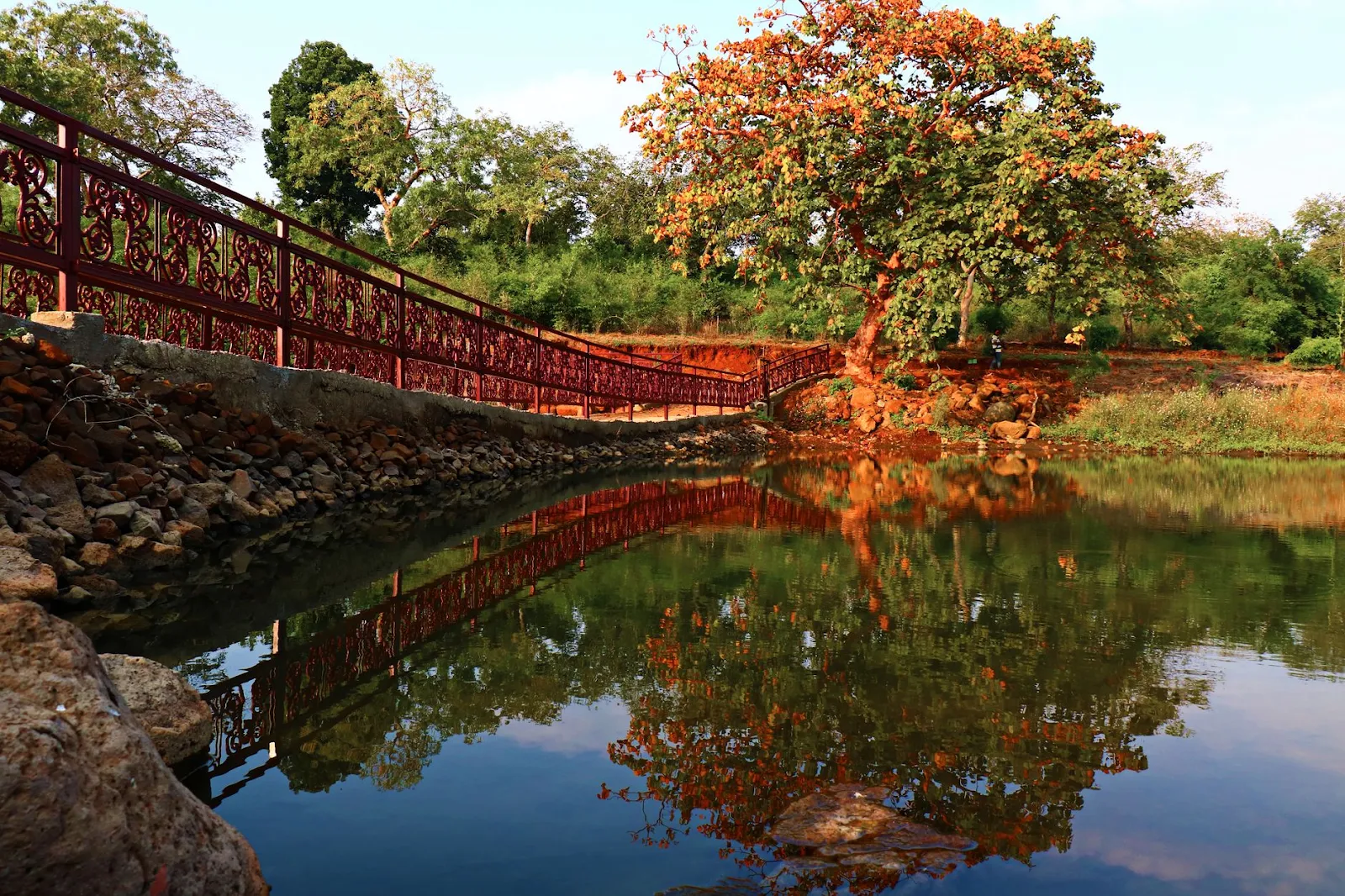
Spread over 1,058 hectares of protected deciduous scrub, dry forest, and a sprawling freshwater reservoir near Jabalpur Airport, Dumna Nature Reserve is the city's green lung. Managed as an eco-tourism park by the municipal administration, this tranquil sanctuary provides a critical refuge for central Indian flora and fauna while offering visitors an immersive wilderness escape within municipal limits.
Why Visit
For nature lovers, bird watchers, and families, Dumna Nature Reserve provides a welcome, restorative contrast to city traffic and heritage monuments. Unlike heavily commercialized parks, Dumna maintains large tracts of untouched wilderness where herds of spotted deer and nilgai roam unhindered across forest paths. With a scenic reservoir attracting thousands of migratory waterfowl in the winter, well-marked hiking and cycling tracks, and an elevated canopy walk, Dumna is easily among the best places to visit in Jabalpur for restorative outdoor recreation.
Key Attractions & Activities
- Wildlife Spotting: Catch frequent sightings of chital (spotted deer), wild boar, nilgai (blue bull), jackals, rhesus macaques, and the occasional leopard.
- Birdwatching: Bring binoculars to spot over 150 species of resident and migratory avifauna, including painted storks, white-throated kingfishers, openbill storks, and paradise flycatchers.
- Nature Trails & Cycling: Rent a bicycle near the entrance gate and ride along paved, shaded trails that snake along the Khandari reservoir perimeter.
- Children’s Toy Train & Eco-Park: Enjoy tree-top hanging suspension bridges, scenic wooden gazebos, and a miniature railway for younger visitors.
Timings & Entry Fee
- Timings: Open daily from 6:00 AM to 6:00 PM.
- Entry Fee: Approximately ₹20 per person. Bicycle rentals and toy train rides cost nominal additional fees (₹30–₹50).
Best Time to Explore
Winter months (November through February) are idyllic, particularly between 6:30 AM and 9:30 AM when the morning mist rises off Khandari Lake and the forest comes alive with birdsong. Post-monsoon (September–October) is equally captivating, with the scrub forest turning lush green.
Best Time to Visit Jabalpur
Planning your trip to Jabalpur around the local climate will make all the difference in your experience:
- Winter (October to March): This is unquestionably the best time to explore Jabalpur. Daytime temperatures hover between a comfortable 15°C and 25°C, making heritage walks and open-air boat rides delightfully comfortable. Nights can turn brisk, with temperatures occasionally dipping to 7°C in December and January.
- Summer (April to June): Central India experiences fierce summers, with temperatures frequently exceeding 42°C. While sight-seeing during midday can prove draining, late-afternoon visits to Dhuandhar Falls and water-bound activities remain viable if you stay hydrated.
- Monsoon (July to September): The monsoon breathes new life into the landscapes of Jabalpur, turning the surrounding hills emerald green and supercharging Dhuandhar Falls into an immense torrent. However, river boating at Bhedaghat is completely suspended throughout the monsoon season due to dangerous water levels and hidden currents.
How to Reach Jabalpur
Positioned almost at the geographical center of the Indian subcontinent, Jabalpur is easily accessible via road, rail, and air networks:
By Air
Jabalpur’s Dumna Airport (JLR) is located approximately 15 kilometers east of the city center. The modernized terminal operates regular direct and connecting flights to key Indian metros, including New Delhi, Mumbai, Hyderabad, Bengaluru, and Indore via major airlines like IndiGo and Alliance Air. Prepaid taxis and app-based cabs operate continuously between the airport and downtown hotels.
By Rail
Jabalpur Junction (JBP) serves as the headquarters of the West Central Railway zone and is one of the busiest and cleanest rail stations in Madhya Pradesh. It connects directly to every major hub across India, including New Delhi, Mumbai, Kolkata, Chennai, Bengaluru, Pune, and Ahmedabad via premium services like the Vande Bharat Express, Jabalpur-Nizamuddin Gondwana Express, and Mahakoshal Express.
By Road
Jabalpur enjoys seamless highway connectivity through major national arteries, including National Highway 30 (NH-30) and NH-34. Well-maintained four-lane express highways connect the city to nearby urban centers such as Nagpur (275 km), Bhopal (320 km), Kanha National Park (130 km), and Bandhavgarh National Park (160 km). Both Madhya Pradesh state transport (MPSTC) buses and private luxury sleepers operate daily from neighboring cities.
Local Culinary Delights: What and Where to Eat
No journey across Jabalpur is complete without indulging in the city's hearty, traditional central Indian street food. The local cuisine balances spicy Bundelkhandi flavors with sweet Maharashtrian and Malwi influences.
- Khoya Jalebi: Unlike typical saffron-colored flour jalebis, Jabalpur's signature sweet is fashioned from concentrated milk solids (khoya) and fried to a deep, dark brown before being steeped in sugar syrup. Head straight to Badkul Restaurant near Kamaniya Gate, which has been crafting this decadent confection since 1889.
- Poha-Jalebi: The undisputed breakfast of choice across the region. Steamed flaked rice seasoned with mustard seeds, curry leaves, green chilies, and crunchy roasted sev is served alongside crisp, piping hot jalebis.
- Dal Bafla: Closely related to the Rajasthani dal baati, soft wheat dough balls are boiled first and then roasted in pure desi ghee before being served with spicy toor dal, smoky baingan bharta, and fiery garlic chutney.
- Chana Samosa: A beloved city street snack consisting of a crushed, crisp potato samosa smothered in spiced chickpea curry, chopped onions, and sweet tamarind relish.
- Sabudana Khichdi: Widely eaten on religious fast days and available at roadside stalls, this dish features sago pearls tossed with roasted crushed peanuts, green chilies, and fresh coriander.
Essential Travel Tips for Visitors to Jabalpur
- Check Boating Seasonality: Boating in Bhedaghat is completely shut down from July through mid-October for monsoon safety. Never plan a trip centered on canyon boating during these months.
- Book Full Moon Boating in Advance: Night boat excursions in Bhedaghat are permitted only on full moon dates and adjacent evenings. Tickets are limited and in high demand; reserve early through the local tourist office or your hotel.
- Hire an Authorised Guide at Bhedaghat: The rowboat boatmen have an encyclopedic, poetic knowledge of the canyon formations. Ensure your boatman recites the iconic rhyming commentary for an authentic experience.
- Mind the Current at Dhuandhar: Stick strictly to designated, barricaded viewpoints near the waterfall. The river rocks are slick with fine spray, and the undertow is dangerously swift.
- Dress Modestly for Chausath Yogini: The temple is an active place of reverence. Wear clothing that covers shoulders and knees, and be ready to climb around 150 stone steps.
- Stay Hydrated: Central India’s sun can feel sharp even during mild winters. Always carry a refillable water bottle while touring outdoor sites like Madan Mahal Fort.
- Bargain Courteously in Stone Markets: The artisans around Bhedaghat are remarkably skilled at marble carving. Reasonable bargaining is customary, but confirm you are purchasing authentic stone rather than cheap plaster replicas.
- Use App-Based Cabs for City Travel: Auto-rickshaws rarely use meters in Jabalpur. While they are fine for short hops, using app-based cabs (Ola, Uber) or booking a full-day private taxi ensures transparent pricing for day tours.
- Combine with Tiger Reserves: Jabalpur serves as the premier transit gate for world-class wildlife hubs like Kanha, Bandhavgarh, and Pench National Parks. Consider bundling them into a combined itinerary.
- Carry Modest Cash: While digital UPI payments are ubiquitous throughout urban Jabalpur, network connectivity can dip down near the Bhedaghat river gorges, making cash handy for boat tickets and small handicrafts.
Suggested 2-Day Jabalpur Itinerary
Day 1: Geological Marvels and Tantric Heritage
- Morning (8:30 AM – 11:30 AM): Drive out to Bhedaghat (approx. 45 minutes from the city center). Head down to Panchvati Ghat and embark on a shared or private boat ride through the soaring Marble Rocks canyon.
- Midday (11:45 AM – 1:30 PM): Climb the stone staircase up to the 10th-century Chausath Yogini Temple. Admire the circular open-air cloister and enjoy commanding views across the countryside.
- Lunch (1:30 PM – 2:45 PM): Savor a traditional MP thali or Dal Bafla at one of the riverside restaurants overlooking Bhedaghat.
- Afternoon (3:00 PM – 5:30 PM): Head over to the roaring Dhuandhar Waterfall. Take the scenic cable car across the gorge and view the falls from the opposite bank as the golden hour sets in.
- Evening (6:30 PM onward): Head back to Jabalpur city. Stroll through the buzzing bazaars near Kamaniya Gate and treat yourself to hot Khoya Jalebi at the historic Badkul store.
Day 2: Gond History, Nature Trails, and Local Flavors
- Morning (7:00 AM – 10:00 AM): Start your day with a morning cycling loop or nature walk through Dumna Nature Reserve Park. Watch out for spotted deer, nilgai, and winter birds around Khandari Lake.
- Late Morning (10:30 AM – 12:00 PM): Enjoy a classic breakfast of Jabalpuri Poha-Jalebi at a popular neighborhood sweetshop.
- Afternoon (1:00 PM – 3:30 PM): Head up to Madan Mahal Fort. Explore the historic Gond watchtower, examine the Balancing Rock, and take in panoramic viewpoints overlooking the city skyline.
- Late Afternoon (4:00 PM – 6:00 PM): Visit the Rani Durgavati Museum to admire centuries-old Kalachuri stone sculptures, tribal artifacts, and historical coins.
- Evening (6:30 PM onward): Head down to Gwarighat on the banks of the Narmada to experience the evening Narmada Maha Aarti, complete with floating brass lamps and resonant temple bells.
Frequently Asked Questions
1. Is Jabalpur safe for solo and female travelers?

Yes, Jabalpur is considered a safe and welcoming destination for solo and female travelers. The local residents are helpful and hospitable. As with any city, exercise standard travel precautions: avoid dimly lit, secluded areas late at night and rely on authorized cabs or ride-hailing services for evening transit.
2. Can you go boating in Bhedaghat during the monsoon?

No. Boat rides through the Marble Rocks canyon are strictly suspended by administrative orders from July through mid-October. Heavy seasonal rainfall raises river levels drastically, creating dangerous undercurrents within the narrow gorge. However, Dhuandhar Falls remains open and puts on a thunderous display during this period.
3. How far is Bhedaghat from the main city of Jabalpur?

Bhedaghat is situated roughly 22 to 25 kilometers southwest of Jabalpur’s central railway station. The journey takes about 45 to 60 minutes by private taxi, auto-rickshaw, or state transit bus along well-paved roads.
4. What is the phenomenon of the Balancing Rock in Jabalpur?

The Balancing Rock is a natural geological curiosity created by centuries of spheroidal weathering. A massive upper granite boulder rests balanced on a lower stone plinth with an extraordinarily small contact area. The rock's balance is so stable that it survived the severe 1997 Jabalpur earthquake without toppling.
5. Which wildlife sanctuaries can be accessed from Jabalpur?
Jabalpur serves as the premier gateway city for several of India’s most celebrated national parks. Kanha National Park sits roughly 130 km away, Bandhavgarh National Park is around 160 km away, and Pench National Park is approximately 200 km to the south. All three are easily reached by road within 3 to 4.5 hours.
6. What are the best souvenirs to buy in Jabalpur?

The most sought-after souvenirs are hand-chiseled marble and soapstone handicrafts sourced directly from the Bhedaghat riverbeds, including miniature idols, decorative plates, and marble lanterns. Other popular items include regional tribal dokra metalwork, handwoven textiles, and boxes of fresh Khoya Jalebi.
7. How many days are ideal to explore Jabalpur comfortably?

A duration of 2 full days is ideal to experience all the top tourist places in Jabalpur, including Bhedaghat, Dhuandhar Waterfall, Chausath Yogini Temple, Madan Mahal Fort, and Dumna Nature Reserve. If you plan to attend the evening Narmada Aarti or take day trips to nearby national parks, consider staying 3 to 4 days.
8. Is night boating in Bhedaghat available every night?

No. Night boating across the Marble Rocks is permitted only around the full moon—specifically on the full moon night itself, alongside the two nights preceding and following it (totaling 5 nights each month, subject to favorable weather and water conditions). It is entirely closed during the monsoon season.
Conclusion
Jabalpur, Madhya Pradesh, India, remains one of the country's most rewarding yet refreshingly unpretentious cultural hubs. Far removed from the rushed commercial itineraries of overcrowded travel circuits, this historic city lets you immerse yourself in the elemental grandeur of central India at a relaxed pace. Whether you are gliding down the pale limestone canyons of Bhedaghat under a quiet sky, feeling the fine mist of Dhuandhar Falls against your skin, or exploring the open-air sanctum of the Chausath Yogini Temple, Jabalpur delivers moments that resonate long after you have returned home.
By blending geological landmarks with rich Gond history and serene nature trails, the best places to visit in Jabalpur offer something distinct for every type of traveler. As you chart out your upcoming journey across central India, ensure you give this city on the Narmada the time it truly deserves. Pack your camera, loosen your travel timetable, and prepare to be enchanted by one of Madhya Pradesh's finest heritage landscapes.



0 Comments