
Top 5 Places to Visit in Aligarh: Discover the Legacy of the Historic Lock City
Aligarh, a historic powerhouse positioned in the western plains of Uttar Pradesh, is widely recognized across India as Tala Nagari—the City of Locks. Yet, beneath its bustling industrial veneer lies an enchanting crossroads of medieval empires, pioneering academic movements, sacred traditions, and vibrant Awadhi-influenced street culture. Located just 130 kilometers southeast of New Delhi, this thriving district offers an authentic slice of North Indian heritage that many travelers unknowingly bypass en route to Agra or Lucknow.
Originally known in ancient manuscripts as Kol or Koil, the city was rechristened Aligarh in the 18th century under the rule of Najaf Khan. Over the centuries, it witnessed the rise and fall of the Delhi Sultanate, the splendor of the Mughal Empire, Maratha dominance under the Scindias, and pivotal encounters of the Anglo-Maratha Wars. Later, in the 19th century, visionary reformer Sir Syed Ahmad Khan elevated the city onto the global stage by founding the Mohammedan Anglo-Oriental College, which matured into the illustrious Aligarh Muslim University. This dynamic blend of academic energy and centuries-old architectural grandeur gives Aligarh its rare personality.
Whether you are drawn by the towering Indo-Saracenic arches of prestigious educational institutions, the crumbling ramparts of battle-scarred fortresses, the spiritual peace of ancient Hindu temples, or the quiet reeds of wetland bird sanctuaries, Aligarh rewards discerning explorers. If you are curating your upcoming itinerary through northern India, exploring the top tourist places in Aligarh promises an unforgettable weekend journey into living history, delectable culinary traditions, and warm hospitality.
1. Aligarh Muslim University (AMU) & Maulana Azad Library

Overview & Historical Significance
Spread over an expansive 467 hectares of manicured greens and heritage brick facades, Aligarh Muslim University is far more than a seat of higher education; it is an architectural marvel and the intellectual heartbeat of the district. Founded in 1875 by Sir Syed Ahmad Khan, this central university stands as one of the best places to visit in Aligarh for architecture enthusiasts and history buffs alike. The sprawling campus displays exemplary Indo-Saracenic and colonial architecture, highlighted by Victoria Gate, Strachey Hall, Sir Syed Hall, and the central university mosque.
Key Attractions & Things to Do
Begin your walking tour at Strachey Hall, named after Sir John Strachey, which features distinct stone masonry, elegant verandahs, and sweeping British-Mughal arches. Directly across the lawn stands the majestic Jama Masjid of the campus, holding the resting place of Sir Syed Ahmad Khan.
A short stroll brings you to the towering Maulana Azad Library, recognized as one of the largest academic libraries in Asia. Spanning seven floors surrounded by manicured gardens, it houses over 1.4 million books and nearly 16,000 rare Persian, Arabic, and Urdu manuscripts, including a celebrated parchment scroll of the Quran transcribed by the fourth Caliph, Ali. Do not miss Sir Syed Academy, located in the founder's former residence, which curates paintings, vintage photographs, letters, and personal effects depicting the Aligarh Movement.
Timings & Entry Information
Campus Grounds: Open daily from 6:00 AM to 9:00 PM.
Maulana Azad Library & Sir Syed Academy: 9:00 AM to 5:00 PM (Closed on Fridays and gazetted university holidays).
Entry Fee: Free entry. Visitors must carry a government photo ID card to register at the main gates.
Practical Visiting Tips
Hire a registered e-rickshaw right outside the Bab-e-Syed entrance gate to navigate between historic campus quarters easily. Dress conservatively out of respect for academic and historical sensibilities. Photography of building exteriors is permitted, but written permission from the university administration may be required for indoor professional camera shoots.
2. Aligarh Fort (Qila-e-Bona Chor)

Overview & Historical Significance
Steeped in martial history, the Aligarh Fort (locally referred to as Bauna Chor Qila or the Fort of the Dwarf Thief) remains an intriguing defensive structure situated along the Grand Trunk Road route. Initially commissioned during the reign of Ibrahim Lodi by Muhammad, son of Governor Umar, in 1524, the bastion was dramatically upgraded throughout the 18th century. French military engineers serving the Maratha warlord Mahadji Scindia overhauled its layout into an advanced polygonal citadel surrounded by deep moats and broad ramparts.
The fort became the scene of intense warfare during the Second Anglo-Maratha War in 1803, when British forces under Lord Gerard Lake captured the fort after the fierce Battle of Ally Ghur. Today, the site is under the joint care of the Archaeological Survey of India (ASI) and AMU's Department of Botany, functioning partly as a botanical conservation sanctuary.
Key Attractions & Things to Do
As you explore the perimeter, you can trace the expansive moat that once held water diverted from nearby marshlands to thwart invaders. Climb the remnant earthworks to view the vintage European-style bastions designed specifically for modern cannon emplacements. The inner enclosure houses quiet botanical gardens, an experimental agricultural farm, ancient water wells, and the crumbling foundations of colonial barracks. Nature photographers will appreciate the dense foliage that attracts parakeets, kingfishers, and peacocks.
Timings & Entry Information
Timings: 8:00 AM to 5:30 PM (Daily; best visited during daylight hours).
Entry Fee: Nominal or free entry (managed via ASI/University groundskeeping protocol).
Practical Visiting Tips
Wear comfortable walking shoes with firm grips, as paths can be overgrown and muddy, particularly following monsoon showers. Carry drinking water and sun protection, as inner amenities are minimal. Avoid staying after dusk since the secluded forested paths lack artificial lighting.
3. Historic Jama Masjid (Upper Fort / Balai Qila)

Overview & Historical Significance
Perched dramatically atop the highest geographical elevation of the town, known locally as Balai Qila (Upper Fort), the historic Jama Masjid of Aligarh stands as an architectural triumph. Commissioned in 1724 by Sabit Khan, the Mughal governor of Kol during the reign of Emperor Muhammad Shah, the mosque took nearly four years to reach completion. Its elevated position offers panoramic views over the old town rooftops and lock markets.
This monument is historically notable for its exquisite golden domes and distinct minarets, making it one of the prominent Mughal structures in the Doab region between the Ganga and Yamuna rivers. Local historians note that it was constructed using white marble and red sandstone, reflecting the classic Mughal architectural idiom popularized in Shah Jahan's era.
Key Attractions & Things to Do
Approaching the mosque involves ascending a wide, grand flight of stone stairs that immediately establishes its regal posture. The structure features three magnificent bulbous white domes crowned with gilded pinnacles, flanked by two towering octagonal minarets that measure over 60 feet high. The interior prayer hall reveals detailed floral stucco carvings, recessed arched niches, and intricate calligraphy etched into the stone friezes. Stepping out onto the marble courtyard, visitors enjoy sweeping vistas of the historical bazaar alleys spreading below like a vibrant maze.
Timings & Entry Information
Timings: 5:00 AM to 8:30 PM daily (Tourists should avoid visiting during daily congregational prayer hours, particularly Friday afternoons).
Entry Fee: Free admission.
Practical Visiting Tips
Modest dress covering shoulders and knees is mandatory for all visitors. Remove your footwear at the designated entryway before stepping onto the courtyard flags. The surrounding narrow lanes of the Balai Qila area can be congested; it is best to arrive via auto-rickshaw rather than attempting to navigate a private automobile through the historic market lanes.
4. Khereshwar Mahadev Temple
Overview & Historical Significance
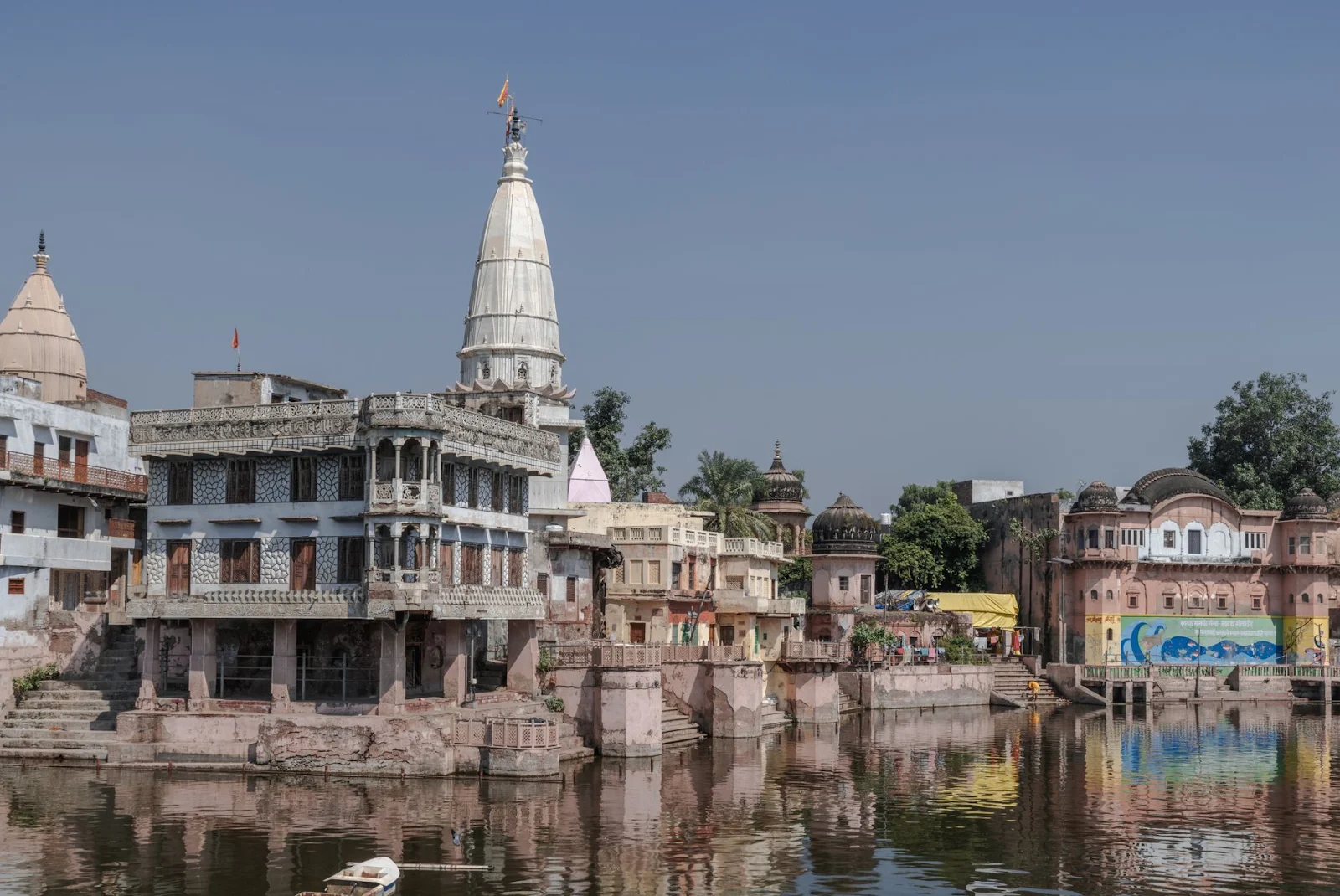
Dedicated to Lord Shiva, the Khereshwar Mahadev Temple is revered as one of the holiest and oldest pilgrimage destinations in the Aligarh district. Located roughly five kilometers from the city center along the Khair Road, this sacred shrine traces its roots to antiquity, with local lore connecting its initial worship traditions to the sage Vishwamitra and the Mahabharata period. The temple complex is renowned for its naturally established (Swayambhu) Shivling, attracting thousands of devout pilgrims from across Uttar Pradesh and Haryana every week.
Key Attractions & Things to Do
The central sanctum sanctorum houses a diminutive yet profoundly revered Shivling covered with brass and copper ornamentation, continually cooled by traditional drip pitchers. The temple architecture presents brilliant North Indian Nagara motifs adorned with painted plasterwork, carved temple spires, and an adjacent sacred pond (Kund) where pilgrims perform ritual ablutions.
Apart from the primary Shiva sanctum, the complex houses small shrines dedicated to Goddess Durga, Lord Ganesha, Hanuman, and Radha-Krishna. Visitors can observe soul-stirring evening Aarti ceremonies accompanied by traditional brass bells, conch shells, and rhythmic chanting. An annual grand fair takes place here during Mahashivratri and the holy month of Shravan, turning the temple premises into an energetic cultural celebration.
Timings & Entry Information
Timings: 5:00 AM to 12:00 PM, and 4:00 PM to 9:00 PM daily.
Entry Fee: Free entry (Special puja tickets or offerings can be purchased at the temple counter).
Practical Visiting Tips
Mornings are generally serene and ideal for quiet meditation before devotional crowds swell. Be mindful of personal belongings and beware of mischievous monkeys inhabiting the surrounding banyan trees. Flower garlands, milk, and bilva leaves are readily available from stalls outside the main gateway.
5. Shekha Lake Bird Sanctuary

Overview & Historical Significance
For nature lovers, landscape photographers, and birdwatching enthusiasts, Shekha Lake is an ecological treasure tucked away approximately 17 kilometers east of Aligarh city, near the village of Shekha. Formed alongside the historic Upper Ganga Canal irrigation network established during the mid-19th century, this perennial freshwater wetland covers over 25 hectares of reed beds, open waters, and shallow marshlands.
During the cooler winter months, Shekha Lake transforms into a crucial staging ground for thousands of migratory birds navigating the Central Asian Flyway. Recognized by environmentalists as an Important Bird and Biodiversity Area (IBA), the sanctuary plays a critical role in regional avian conservation, offering a refreshing rural contrast to Aligarh's bustling urban center.
Key Attractions & Things to Do
Shekha Lake accommodates nearly 160 species of resident and migratory waterbirds. Bring a pair of high-powered binoculars or a telephoto camera lens to spot elegant Bar-headed Geese, Northern Pintails, Common Teals, Gadwalls, Mallards, and Spoonbills drifting along the lotus-covered shallows. Resident waders such as the Sarus Crane—the state bird of Uttar Pradesh—can often be seen performing their stately courtship dances in surrounding mustard fields.
The peaceful dirt paths looping around the water provide an ideal route for early morning walks and slow bicycle touring. The lakeside is also framed by dense groves of Acacia, Eucalyptus, and flowering water lilies, offering stunning reflections at dawn and dusk.
Timings & Entry Information
Timings: 6:00 AM to 6:00 PM daily (Accessible throughout the year; optimal between November and March).
Entry Fee: Free entry.
Practical Visiting Tips
Since the sanctuary is located in an underdeveloped rural area, there are no commercial dining or equipment rental facilities. Pack your own drinking water, snacks, binoculars, and field guidebooks. Maintain silence along the earthen embankments to avoid disturbing nesting bird flocks, and avoid littering plastic wrappers in the fragile wetland habitat.
Best Time to Visit Aligarh
The ideal window to plan a trip to Aligarh is between October and March. During this winter period, North India enjoys clear skies, comfortable daytime temperatures averaging between 12°C and 25°C, and refreshing breezes. These pleasant conditions are well-suited for wandering the expansive lawns of Aligarh Muslim University, exploring the unshaded grounds of Aligarh Fort, or birdwatching at Shekha Lake.
Conversely, the summer months from April to June are scorching, with temperatures often surpassing 42°C accompanied by dusty winds known as Loo. The monsoon season (July to September) brings high humidity and occasional waterlogging in older quarters, though it leaves rural fields lush and green. If you appreciate traditional culture and commerce, scheduling your trip in February allows you to experience the famed Aligarh Numaish (State Industrial & Agricultural Exhibition), a landmark cultural fair organized continuously since 1880.
How to Reach Aligarh
Aligarh is exceptionally well-connected to major metropolitan hubs across northern India via extensive rail and road networks:
By Air
The nearest international and domestic air terminal is Indira Gandhi International Airport (DEL) in New Delhi, situated around 140 kilometers away. Alternatively, Kheria Airport (AGR) in Agra operates select domestic flights and lies 85 kilometers to the south. Taxis, app-based cabs, and intercity bus services connect both airports directly to Aligarh via modern expressways.
By Train
Aligarh Junction (ALJN) is a prominent rail stop situated on the prime Delhi-to-Howrah main line. Premium trains including the Kanpur Shatabdi, Gomti Express, and several Rajdhani express trains halt here, linking Aligarh with New Delhi, Lucknow, Kanpur, Kolkata, and Varanasi. The rail journey from New Delhi Railway Station takes just under two hours on express routes.
By Road
Aligarh enjoys seamless highway access via the 6-lane Yamuna Expressway (exiting at the Tappal or Raya interchanges) and National Highway 34 (Grand Trunk Road). State-run UPSRTC buses, air-conditioned intercity coaches, and private taxis run continuously from Delhi's Anand Vihar ISBT, Noida, Agra, Mathura, and Meerut directly into Aligarh's central bus terminals (Sootmil and Masoodabad).
Culinary Delights: What to Eat in Aligarh
Aligarh’s culinary identity is a delicious synthesis of western Uttar Pradesh rustic staples and delicate royal Mughlai recipes nurtured by generations of traditional cooks. A trip here is incomplete without embarking on an authentic street food crawl through the historic lanes of Purani Chungi, Shamshad Market, and Amir Nisha.
- Aligarh ki Barula: The city's iconic signature snack. Small baby potatoes are coated in spiced gram flour and cornstarch, fried crisp, flattened, and drenched in a fiery, tangy spinach-and-coriander green chutney with a splash of dried mango powder.
- Bedmi Puri & Hing Aloo: The classic local breakfast. Crisp puris made from lentil-stuffed whole wheat dough served with a pungent, asafoetida-rich potato curry and sour fenugreek relish.
- Mughlai Kebabs & Nihari: Available in the bustling food stalls around Shamshad Market and Dodhpur, tender Galawati kebabs, charcoal-roasted seekh kebabs, and slow-simmered beef or mutton Nihari are served alongside flaky, hot tandoori khameeri rotis.
- Ghewar & Rabri: Aligarh’s sweet shops excel at traditional milk desserts. Enjoy honeycomb discs of crisp Ghewar topped with saffron-infused clotted cream (Rabri) and crushed pistachios, especially around festival times.
10 Essential Travel Tips for Aligarh
- Carry Photo ID: Access to historic university monuments like the Maulana Azad Library requires valid identification at the security checkpoints.
- Rely on E-Rickshaws: Aligarh's historical city center has narrow lanes with heavy traffic. Battery-operated e-rickshaws are inexpensive, quick, and can navigate tight bazaar passages with ease.
- Purchase Certified Locks: While in the lock capital of India, visit the wholesale lock markets in Railway Road or Centre Point. Authentic brass locks and handcrafted padlocks make unique and functional souvenirs.
- Dress Appropriately: When visiting functioning religious spots like the Jama Masjid or Khereshwar Temple, ensure your shoulders and legs are comfortably covered, and carry a scarf for head coverings.
- Plan Birdwatching Early: If traveling to Shekha Lake, reach the waterfront between 6:30 AM and 8:30 AM when waterbirds are feeding near the shore and light conditions are optimal for photography.
- Double-check University Schedules: Academic institutions on the AMU campus are closed to outside visitors on Fridays, Sundays, and during official university examinations.
- Carry Cash: While digital payment apps (UPI) are common, smaller tea vendors, chaat stalls, and rural rickshaw pullers often prefer cash transactions.
- Stay Hydrated in Summer: If visiting in shoulder months like March or October, afternoon temperatures rise swiftly. Always carry bottled water and electrolyte drinks.
- Bargain in Local Bazaars: In markets like Amir Nisha and Phool Chauraha, polite bargaining is normal when shopping for brass artifacts, ethnic clothing, and handicrafts.
- Sample Local Breakfasts Early: Popular morning sweet shops run out of hot Bedmi Puri and fresh Jalebis by 10:30 AM, so begin your food explorations early.
Suggested 2-Day Aligarh Itinerary
This balanced 48-hour plan lets you explore the top tourist places in Aligarh comfortably without feeling rushed.
Day 1: Architectural Wonders, Heritage, and Evening Delicacies
- Morning (8:30 AM – 12:30 PM): Start with a traditional breakfast of piping hot Bedmi Puri at a city sweet shop, then head straight to the Aligarh Muslim University campus. Tour the iconic Victoria Gate, Strachey Hall, Sir Syed Academy, and spend an hour admiring rare manuscripts at Maulana Azad Library.
- Lunch (1:00 PM – 2:30 PM): Enjoy rich Mughlai biryani, korma, and freshly baked rotis at an authentic restaurant near Dodhpur or Civil Lines.
- Afternoon (3:00 PM – 5:00 PM): Take an e-rickshaw to Balai Qila (Upper Fort) to visit the historic Jama Masjid. Admire its gilded domes and soak in sweeping views of the bustling city from the high terrace.
- Evening (5:30 PM – 8:00 PM): Explore the colorful Amir Nisha market for brassware and artisanal locks. Conclude your evening savoring crunchy local Barula snacks and fresh rabri-jalebi at Purani Chungi.
Day 2: Nature, Fort Ruins, and Spiritual Shrines
- Early Morning (6:30 AM – 9:30 AM): Take a scenic morning drive to Shekha Lake Bird Sanctuary. Spend a peaceful morning walking the wetland banks, identifying resident and migratory birds amidst the cool morning mist.
- Brunch (10:30 AM – 11:30 AM): Return toward the city and enjoy a hearty north Indian breakfast or paratha spread.
- Midday (12:00 PM – 2:30 PM): Travel to the perimeter of Aligarh Fort (Qila-e-Bona Chor). Explore the remnants of its Maratha-French bastions and observe native flora within the surrounding botanical sanctuary.
- Afternoon (3:30 PM – 5:30 PM): Drive along Khair Road to pay homage at the ancient Khereshwar Mahadev Temple. Soak in the peaceful ambiance of the temple kund and participate in the vibrant evening Aarti before wrapping up your visit.
Frequently Asked Questions
Why is Aligarh famous across India?
Aligarh is famous for two primary reasons: its world-renowned lock and brassware manufacturing industry, which earned it the title of Tala Nagari, and Aligarh Muslim University (AMU), one of India's premier central academic institutions founded by Sir Syed Ahmad Khan.
Is Aligarh safe for solo travelers and families?
Yes, Aligarh is generally safe for both solo travelers and families. The university areas, Civil Lines, and Centre Point are modern, welcoming, and lively. As with any bustling tier-2 Indian city, it is advisable to avoid unlit outskirts late at night and keep track of your belongings in crowded market quarters.
Can outside tourists visit the Aligarh Muslim University campus?
Yes, tourists and visitors can enter the AMU campus grounds. While the landscaped outdoor avenues and building exteriors are accessible to the public, entering specialized facilities such as the Maulana Azad Library or Sir Syed Academy requires registering your name and presenting a government photo ID at the entrance.
What are the best souvenirs to buy in Aligarh?
The finest souvenirs to bring home are handcrafted brass locks, vintage-style padlock mechanisms, decorative brass home decor, and authentic packs of dry snacks like locally prepared namkeens and seasonal sweets.
How far is Aligarh from Delhi, and can it be done as a day trip?
Aligarh is roughly 130 to 140 kilometers from New Delhi. Thanks to frequent fast express trains that cover the distance in around 1.5 to 2 hours, a day trip is entirely feasible. However, staying for two full days allows for a much more relaxed exploration of its nature preserves and culinary scene.
What is the cultural festival known as Aligarh Numaish?
The Aligarh Numaish, officially designated as the State Industrial & Agricultural Exhibition, is a massive cultural fair held annually every winter (usually in January or February) since 1880. It features amusement rides, local trade stalls, classical musical performances, poetry mushairas, and extensive food streets.
What is special about the street food snack 'Barula'?
Barula is an indigenous Aligarh street delicacy made from whole baby potatoes dipped in a spiced batter of gram flour and cornmeal, deep-fried twice until extra crunchy, lightly crushed, and served hot with an assertive, sour green chili-and-spinach chutney.
Do I need binoculars when visiting Shekha Lake?
Yes, carrying a good pair of binoculars or a zoom lens is highly recommended. The waterbirds often roost on floating vegetation and shallow mudflats toward the center of the lake, far from the walking banks.
Conclusion
Aligarh is a captivating city that rewards anyone willing to step beyond the standard Golden Triangle tourist circuit. Its unique charm lies in its harmonious contradictions: the calm, scholarly dignity of Sir Syed’s university avenues stands just minutes away from the energetic brass-hammering lock workshops of the old bazaar; peaceful wetlands visited by migratory Siberian fowl sit alongside the rugged ramparts of Maratha forts.
Whether you are drawn to northern India by an appetite for authentic Awadhi-influenced street food, an eye for historic Indo-Islamic architecture, or a desire to connect with sacred traditions at age-old shrines, this historic corner of Uttar Pradesh delivers a memorable journey. As you map out your travels across India, give yourself the time to uncover the top tourist places in Aligarh—you will discover a city proud of its past, bustling in its present, and deeply welcoming to curious explorers.



0 Comments