
Top 5 Places to Visit in Yavatmal, Maharashtra: Ultimate Travel Guide
Located in the heart of the Vidarbha region in eastern Maharashtra, Yavatmal is a land where rich history, deep-rooted culture, and pristine natural landscapes meet. Popularly referred to as the "Cotton City" of India due to its vast cotton production, Yavatmal holds far more than just commercial significance. It is a destination that appeals to wildlife enthusiasts, spiritual seekers, history buffs, and offbeat travelers looking to explore beyond Maharashtra's conventional tourist circuits.
Bounded by the Wardha and Painganga rivers, the district features dense teak forests, rushing waterfalls, ancient temples, and vast wildlife reserves. Unlike mainstream tourist hotspots that are often overcrowded, Yavatmal offers a raw, authentic glimpse into rural Maharashtra and untouched natural wilderness. From tracking majestic Bengal tigers in Tipeshwar Wildlife Sanctuary to admiring the roaring waters at Sahasrakund Waterfall and seeking blessings at the subterranean Chintamani Temple in Kalamb, the region promises a diverse array of experiences.
In this comprehensive travel guide, we will explore the best places to visit in Yavatmal, practical details on how to get there, local food recommendations, ideal travel itineraries, and essential tips to help you plan an unforgettable trip to this vibrant district of Maharashtra.
Table of Contents
- 1. Tipeshwar Wildlife Sanctuary
- 2. Sahasrakund Waterfall
- 3. Chintamani Ganpati Temple, Kalamb
- 4. Isapur Dam
- 5. Painganga Wildlife Sanctuary
- Best Time to Visit Yavatmal
- How to Reach Yavatmal
- Local Food and Culinary Highlights
- 10 Essential Travel Tips for Yavatmal
- Suggested 2-Day Yavatmal Itinerary
- Frequently Asked Questions (FAQs)
- Conclusion
1. Tipeshwar Wildlife Sanctuary
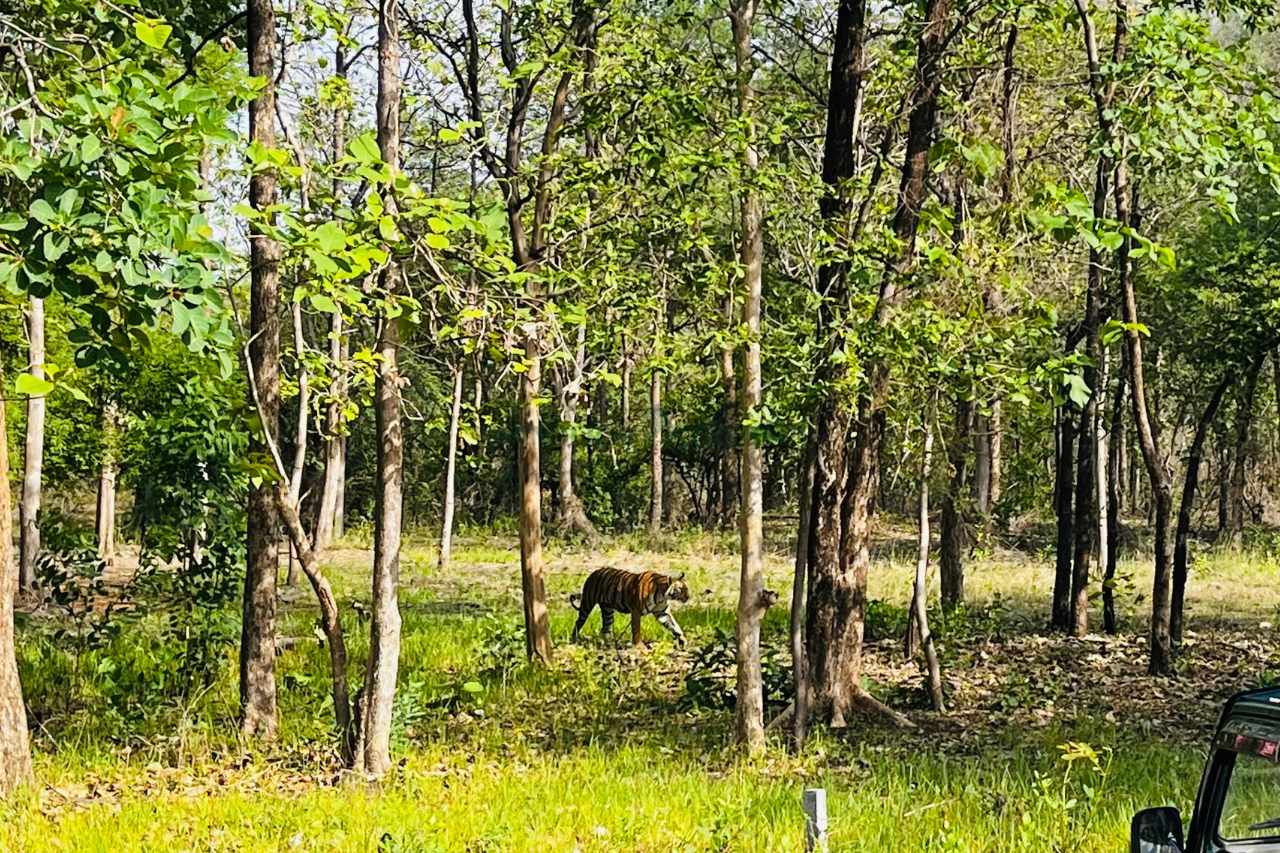
Tipeshwar Wildlife Sanctuary is undeniably the crown jewel of Yavatmal’s tourism offerings. Spanning across nearly 148 square kilometers in the Pandharkawada district, Tipeshwar has rapidly emerged as one of the best locations in Maharashtra for tiger sightings. Named after the village Tipeshwar located inside the reserve, the sanctuary features hilly terrain, dry deciduous forests, and lush bamboo thickets watered by natural springs and streams like the Purna and Krishna rivers.
The reserve boasts a flourishing population of Royal Bengal Tigers, along with leopards, sloth bears, wild dogs (dholes), hyenas, sambar deer, chital, nilgai, and wild boars. Birdwatchers can also spot over 180 species of birds, including peacocks, serpent eagles, and paradise flycatchers. Because of its relatively compact area and high density of apex predators, safari success rates at Tipeshwar are remarkably high compared to larger, national reserves.
Key Attractions & Things to Do
- Jungle Jeep Safaris: Book an open-top 4x4 Gypsy safari through the Sunna or Mathane entry gates for a chance to spot tigers in their natural habitat.
- Bird Watching: Explore the forest trails during the early morning hours to observe diverse avian life.
- Nature Photography: Capture breathtaking shots of Vidarbha's rugged forest landscape and rich fauna.
Visitor Information
- Timings: Morning Safari: 6:00 AM – 10:00 AM; Afternoon Safari: 2:30 PM – 6:30 PM (Varies slightly by season). Closed on Tuesdays and during the monsoon season (July to September).
- Entry Fee: Safari permits start around ₹500–₹1000 per vehicle plus mandatory guide and vehicle hire charges. Online booking via the official Maharashtra Forest Department portal is recommended.
- Best Time to Visit: October to May (March to May offers the highest tiger sighting probabilities around waterbodies).
How to Reach & Local Transport
Tipeshwar is situated roughly 75 km south of Yavatmal city and around 35 km from Pandharkawada. Visitors can hire private taxis from Yavatmal, Nagpur, or Nanded to reach the sanctuary gates directly. Local state transport buses connect Yavatmal to Pandharkawada, from where auto-rickshaws or private cabs are easily available.
2. Sahasrakund Waterfall
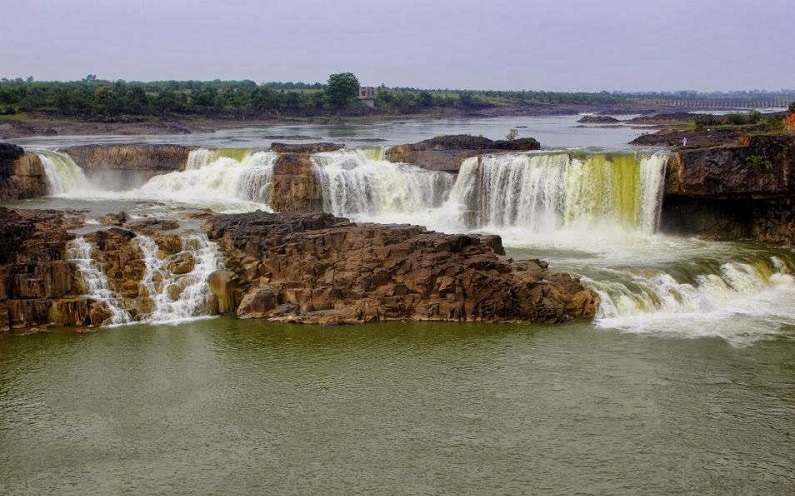
Located near the border of Yavatmal and Nanded districts along the roaring Painganga River, Sahasrakund Waterfall is one of the most stunning natural spectacles in the region. The name "Sahasrakund" roughly translates to "a thousand pools," referring to the naturally carved rock formations and water channels that break the river into multiple churning cascades over hard black basalt rocks.
The waterfall cascades from a height of approximately 50 feet, producing a thunderous roar and mist that blankets the surrounding greenery. A long steel suspension bridge stretches across the river, giving visitors an elevated, panoramic view of the cascading water and the dramatic rock formations. The riverbed here displays unique volcanic basalt patterns, making it a favorite spot for geology enthusiasts and landscape photographers alike.
Key Attractions & Things to Do
- Suspension Bridge Walk: Cross the footbridge to get breathtaking aerial photography perspectives of the waterfall and gorge.
- Watchtower Views: Visit the surrounding gardens and elevated watchtowers constructed by the tourism department for safe viewing.
- Picnicking: Relax under shaded groves near the riverbanks during post-monsoon months.
Visitor Information
- Timings: Open daily from 6:00 AM to 6:00 PM.
- Entry Fee: Free entry (nominal parking charges apply for private vehicles).
- Best Time to Visit: August to December when the river flows at full volume post-monsoons.
How to Reach & Local Transport
Sahasrakund is located about 100 km from Yavatmal city and roughly 50 km from Himayatnagar. The most comfortable way to reach the waterfall is by private vehicle or hired taxi via the Yavatmal-Isapur route. Sahasrakund Railway Station is also nearby, served by select local passenger trains from Nanded and Purna.
3. Chintamani Ganpati Temple, Kalamb

For spiritual travelers, the ancient Chintamani Ganpati Temple in Kalamb, located approximately 22 km from Yavatmal, is an absolute must-visit destination. This historic shrine is recognized as one of the twenty-one famous "Ashta Chintamani" temples across India, holding immense religious significance in Maharashtra. What sets this temple apart architectural wise is its unique subterranean structure.
The main idol of Lord Ganesha is seated roughly 25 feet underground in a rock-hewn sanctum. To reach the deity, devotees descend a flight of narrow stone steps into the cool subterranean chamber. Adjacent to the sanctuary is a holy water pool called the "Chintamani Kund," which is fed by natural subterranean springs. Local legends state that the water level in this spring rises automatically during special festival days. The tranquil atmosphere and historical charm make Kalamb an important pilgrimage destination.
Key Attractions & Things to Do
- Subterranean Sanctum Visit: Descend into the cave-like underground sanctum to offer prayers to the self-manifested (Swayambhu) Ganesha idol.
- Chintamani Kund: Witness the sacred water tank inside the complex known for its perennial natural spring water.
- Ganesh Chaturthi Celebrations: Experience the high-energy local festivities, cultural programs, and fairs held during Ganesh Chaturthi and Maghi Chaturthi.
Visitor Information
- Timings: Open daily from 5:00 AM to 9:00 PM.
- Entry Fee: Free entry for all visitors. Special pooja charges apply as per temple trust rules.
- Best Time to Visit: Throughout the year, especially during Ganesh Chaturthi (August/September) and Maghi Chaturthi (January/February).
How to Reach & Local Transport
Kalamb is well-connected by road and lies on the Yavatmal-Nagpur highway line. Regular MSRTC state transport buses and shared auto-rickshaws run between Yavatmal bus stand and Kalamb throughout the day, making travel convenient and affordable.
4. Isapur Dam
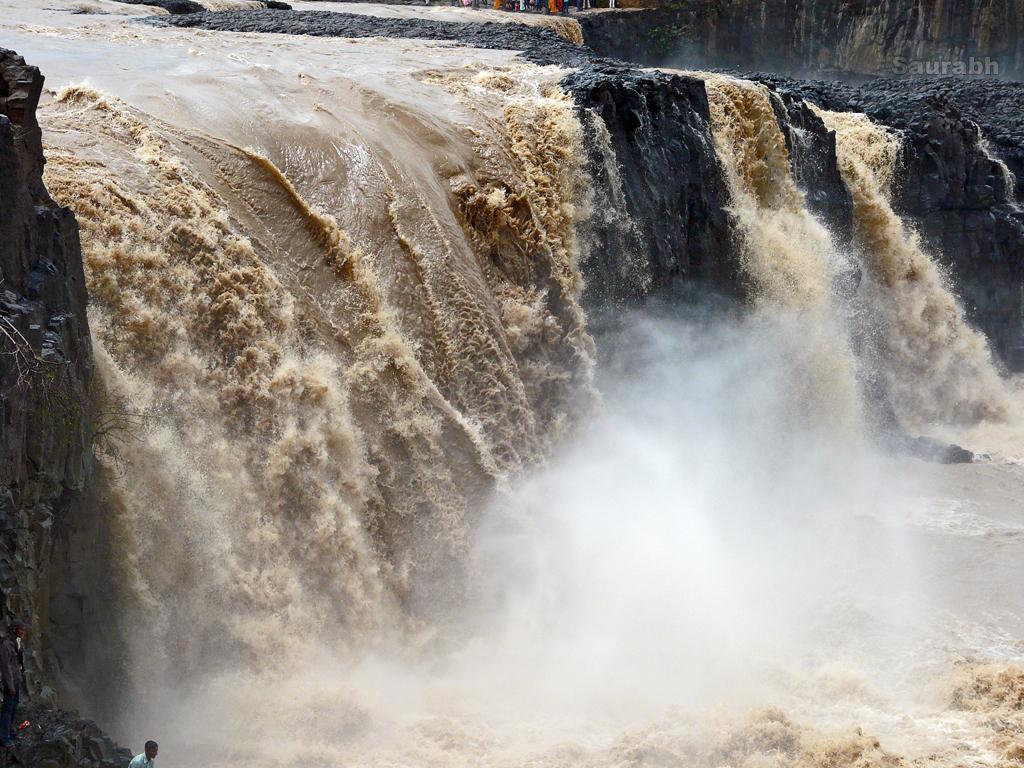
Constructed across the Painganga River on the border of Yavatmal and Hingoli districts, Isapur Dam is one of the largest earthfill dams in Maharashtra. Spanning several kilometers, the dam creates a massive, serene reservoir that serves as a vital water source for regional agriculture while doubling as a peaceful getaway for nature lovers and birdwatchers.
During the winter months, the expansive backwaters of Isapur Dam become a haven for thousands of migratory birds, including bar-headed geese, flamingos, ducks, cranes, and cormorants. The open sky, sparkling blue water, and green surroundings make it a preferred spot for evening walks, photography, and quiet nature observation. Sunset views over the expansive reservoir are particularly striking.
Key Attractions & Things to Do
- Bird Watching: Bring binoculars during the winter season to spot migratory waterbirds along the backwaters.
- Sunset Photography: Capture dramatic orange sky reflections across the expansive water reservoir.
- Scenic Walks: Walk along designated outer pathways to enjoy sweeping views of the engineering structure and surrounding hills.
Visitor Information
- Timings: 8:00 AM to 6:00 PM. Access to security zones on top of the dam wall may require local permissions.
- Entry Fee: Free entry.
- Best Time to Visit: November to March (winter season for birdwatching).
How to Reach & Local Transport
Isapur Dam lies approximately 90 km southwest of Yavatmal city. It is best reached by private car or taxi, often combined with a day trip to Sahasrakund Waterfall, which is situated further downstream along the same river corridor.
5. Painganga Wildlife Sanctuary

Wrapping around three sides of the Painganga River, the Painganga Wildlife Sanctuary covers an impressive expanse of over 300 square kilometers across Yavatmal and Nanded districts. This protected forest region consists primarily of southern tropical dry deciduous forests dominated by teak, bamboo, and tendu trees, creating a dense green refuge in the Vidarbha plains.
The sanctuary serves as an important ecological habitat for diverse wildlife including leopards, chinkara (Indian gazelle), nilgai, four-horned antelopes, barking deer, jackals, and striped hyenas. Its riverine ecology makes it a thriving sanctuary for reptilian species and waterfowl. While less commercially developed for mainstream tourism than Tipeshwar, Painganga offers an uncrowded experience for true wilderness enthusiasts and rustic nature campers.
Key Attractions & Things to Do
- Forest Exploration: Drive through designated forest tracks accompanied by certified local guides.
- Flora and Fauna Identification: Discover rare medicinal plants, dense teak wood stands, and diverse herbivore species.
- Bird Watching: Explore riverine forest zones home to hornbills, nightjars, and various raptors.
Visitor Information
- Timings: 6:00 AM to 5:00 PM daily. Forest permits must be obtained at entry check posts.
- Entry Fee: Nominal forestry entry fee per person and vehicle.
- Best Time to Visit: November to April.
How to Reach & Local Transport
The sanctuary entry points are located about 100 km from Yavatmal city. The nearest major town with regional bus service is Umarkhed (roughly 30 km away). Hiring a private SUV or personal car from Yavatmal or Nanded is recommended for traversing the rural approaches leading into the forest areas.
Best Time to Visit Yavatmal
Understanding the weather patterns of the Vidarbha region is crucial for planning a comfortable trip to Yavatmal. The district experiences extreme climate variations across three distinct seasons:
- Winter Season (October to February): This is the best time to visit Yavatmal. Temperatures range from a pleasant 13°C to 28°C. The weather remains cool and comfortable for outdoor sightseeing, temple visits, dam excursions, and wildlife safaris.
- Summer Season (March to June): Summers in Yavatmal are notoriously hot, with temperatures often surpassing 42°C to 45°C in April and May. However, this is prime time for wildlife enthusiasts visiting Tipeshwar Wildlife Sanctuary, as animals frequently gather around open waterholes, drastically improving tiger sighting chances.
- Monsoon Season (July to September): Yavatmal receives moderate to heavy rainfall during these months. The landscape turns vibrant green, and Sahasrakund Waterfall flows at full peak capacity. However, forest safaris in Tipeshwar and Painganga remain closed due to muddy forest tracks.
How to Reach Yavatmal
Yavatmal is strategically situated in eastern Maharashtra and enjoys decent road connections with major industrial and urban hubs across the state.
By Air
Yavatmal has a domestic airstrip (Yavatmal Airport) at Rajur, but commercial flight services are limited. The nearest major functional commercial airport is Dr. Babasaheb Ambedkar International Airport in Nagpur, located approximately 145 km away. Nagpur is well-connected to major Indian cities including Mumbai, Delhi, Bengaluru, Pune, and Hyderabad. From Nagpur, you can easily hire a private taxi or take a direct state transport bus to Yavatmal (a 3-hour drive).
By Train
Yavatmal Railway Station currently operates on narrow-gauge connectivity with limited train options. The nearest major railway junction is at Dhamangaon Railway Station (45 km away) or Wardha Junction (70 km away). Both stations lie on the main Mumbai-Nagpur-Howrah railway line and receive major express and superfast trains daily. Taxis and frequent feeder buses operate between these stations and Yavatmal.
By Road
Road travel is the most convenient way to reach Yavatmal. The district is connected via National Highway 361 (NH 361) and State Highways to Nagpur, Amravati, Nanded, Chandrapur, and Pune. Maharashtra State Road Transport Corporation (MSRTC) operates regular sleeper and semi-sleeper buses from Mumbai, Pune, Nagpur, Aurangabad, and Hyderabad directly to Yavatmal Central Bus Stand.
Local Food and Culinary Highlights
Food in Yavatmal reflects classic Varadi cuisine—the bold, aromatic, and spicy culinary style of the Vidarbha region. Ground spices, dried coconut, garlic, sesame seeds, and chili oil (known locally as Tari) feature prominently in local dishes.
- Saoji Chicken & Mutton Curry: The famous regional specialty cooked in rich, fiery dark spice blends. Best enjoyed with jawar (sorghum) bhakri or hot steamed rice.
- Pardhi Chicken / Handi Meat: Local rustic preparations slow-cooked over wood charcoal fires in earthen pots.
- Patodi Rasta: Gram flour cakes cut into diamond shapes served floating in a spicy, flavorful red gravy.
- Varadi Pitla Bhakri: A comforting traditional staple made of spiced chickpea flour paste served with hot sorghum or pearl millet flatbreads, green chili garlic chutney (Thecha), and raw onions.
- Sambar Vadi / Kothimbir Vadi: Crispy rolls stuffed with spiced coriander leaves and poppy seeds, served as a savory evening snack.
10 Essential Travel Tips for Yavatmal
- Book Safaris in Advance: Vehicle entries into Tipeshwar Wildlife Sanctuary are strictly limited per session. Always reserve your safari permits online through the official Maharashtra Forest portal well ahead of your travel dates.
- Carry Adequate Cash: While digital UPI payments work in Yavatmal city, remote regions near Tipeshwar, Sahasrakund, and Isapur Dam often suffer from patchy network connectivity. Keep sufficient cash for local expenses and transport.
- Dress Appropriately for Safaris: Wear neutral-colored earth-tone clothing (greens, browns, khaki) during jungle safaris. Avoid bright fluorescent clothing and heavy perfumes that might agitate wildlife.
- Stay Safe at Waterfalls: Basalt rocks around Sahasrakund Waterfall get extremely slick during monsoons. Respect safety barriers, refrain from swimming in high-current zones, and avoid crossing safety fences for selfies.
- Pack Light Cotton and Sun Protection: Vidarbha afternoon temperatures rise quickly even in late winter. Pack light breathable cotton clothes, wide-brimmed hats, sunglasses, and high-SPF sunscreen.
- Respect Temple Dress Codes: When visiting spiritual sites like Chintamani Temple in Kalamb, wear modest, traditional attire that covers shoulders and knees.
- Hire Local Guides: Engaging certified local naturalists at Tipeshwar and Painganga supports local community livelihoods while greatly improving your tracking and bird-spotting odds.
- Keep Hydrated: Always carry reusable water bottles filled with safe drinking water, especially when venturing out on rural day trips away from city centers.
- Plan Transportation Early: Public buses between distant rural sights run on fixed schedules. For seamless travel across multiple distant attractions, renting a private car for the day is recommended.
- Avoid Night Driving in Remote Forest Belts: Avoid driving late through forest corridors around Painganga and Tipeshwar due to wildlife crossings, lack of street lighting, and limited roadside repair services.
Suggested 2-Day Yavatmal Itinerary
Day 1: Wildlife Adventure & Spiritual Exploration
- Morning (6:00 AM – 10:00 AM): Take an early morning jungle safari at Tipeshwar Wildlife Sanctuary (Sunna or Mathane gate). Track Royal Bengal tigers, leopards, and forest birds.
- Late Morning (11:30 AM): Drive back to Yavatmal or stop at a local dhabha near Pandharkawada for an authentic Varadi lunch (Pitla Bhakri or spicy Saoji preparations).
- Afternoon (3:00 PM): Visit the historic Chintamani Ganpati Temple in Kalamb. Spend an hour admiring the subterranean architecture and quiet spring waters of Chintamani Kund.
- Evening (6:30 PM): Return to Yavatmal city center. Explore local markets, sample local street snacks like Sambar Vadi, and relax for the evening.
Day 2: Waterfalls, Dams, and Scenic Backwaters
- Morning (8:00 AM): Depart early from Yavatmal city towards Sahasrakund Waterfall (approx. 2-hour drive). Walk across the suspension bridge and take photos of the roaring Painganga River gorge.
- Lunch (1:00 PM): Enjoy a casual picnic lunch or dine at a roadside restaurant near Umarkhed.
- Afternoon (3:30 PM): Head over to Isapur Dam reservoir. Enjoy winter birdwatching along the calm backwaters and watch the sun set across the expansive reservoir.
- Evening (6:30 PM): Head back to Yavatmal city or proceed onward to your next travel destination (Nagpur or Nanded).
Frequently Asked Questions (FAQs)
1. Is Yavatmal safe for solo travelers and families?
Yes, Yavatmal is a safe, peaceful district to travel in. Locals are warm and welcoming. Simple precautions—such as avoiding late-night travel in remote forest patches and keeping cash on hand—apply as with any rural travel destination in India.
2. How far is Tipeshwar Wildlife Sanctuary from Yavatmal city?
Tipeshwar Wildlife Sanctuary is located approximately 75 kilometers south of Yavatmal city. The drive takes around 1.5 to 2 hours via NH 361 depending on road conditions and chosen gate.
3. Are tiger sightings guaranteed at Tipeshwar Wildlife Sanctuary?
While no wild animal sighting is guaranteed, Tipeshwar has one of the highest tiger densities relative to its size in India. Sightings are quite frequent, particularly during the dry summer months (March to May) near natural waterholes.
4. What is Yavatmal famous for?
Yavatmal is famous historically as a major cotton-producing hub ("Cotton City"). Touristically, it is known for Tipeshwar Wildlife Sanctuary, the underground Chintamani Ganesha Temple in Kalamb, Sahasrakund Waterfall, and spicy Varadi / Saoji cuisine.
5. Can we swim at Sahasrakund Waterfall?
No, swimming at Sahasrakund Waterfall is unsafe and strongly discouraged due to strong underlying river currents, steep underwater drop-offs, and slippery basalt rock surfaces.
6. Which is the nearest airport to Yavatmal?
The nearest fully functional domestic and international airport is Dr. Babasaheb Ambedkar International Airport in Nagpur, located approximately 145 km away from Yavatmal city.
7. Is online booking compulsory for Tipeshwar safaris?
Prior online booking via the official Maharashtra Forest Department portal is highly recommended, as spot permits at entry gates are strictly limited and fill up fast during weekends and holidays.
8. How many days are needed to explore Yavatmal?
A well-planned 2-day itinerary is sufficient to cover the top tourist places in Yavatmal, including a tiger safari at Tipeshwar, temple visits, and trips to Sahasrakund Waterfall and Isapur Dam.
Conclusion
Yavatmal is a hidden gem in Maharashtra's tourism landscape that balances wild natural beauty, rich ancient heritage, and authentic regional culture. Whether you are tracking wild predators through the teak forests of Tipeshwar, admiring the dramatic gorge at Sahasrakund, or seeking subterranean calm in the historic temples of Kalamb, Yavatmal offers an uncrowded and rewarding getaway.
For travelers eager to step off the beaten track and experience rural Vidarbha at its finest, Yavatmal delivers unforgettable memories, warm local hospitality, and thrilling outdoor adventures. Plan your journey during the pleasant post-monsoon or winter months to explore everything this fascinating district has to offer!



0 Comments