
Top 5 Places to Visit in Osmanabad (Dharashiv): A Comprehensive Travel Guide
Tucked away in the southern region of Marathwada, Maharashtra, Osmanabad—recently officially renamed Dharashiv—is a destination where deep-rooted spirituality, ancient rock-cut architecture, and formidable military heritage seamlessly converge. Often overlooked by mainstream tourists who flock to Aurangabad or Pune, this historic district offers an amazingly authentic glimpse into Maharashtra's glorious past. From revered pilgrimage shrines visited by millions each year to impressive medieval forts equipped with genius engineering feats, the top tourist places in Osmanabad promise a quiet, fulfilling adventure for every kind of traveler.
Whether you are an avid history buff eager to decode ancient cave inscriptions, a spiritual seeker planning a pilgrimage to Tuljapur, or a road-tripper looking for hidden gems off the typical tourist trail, Osmanabad has plenty to offer. The district's unique cultural mosaic is shaped by various dynasties, including the Chalukyas, Rashtrakutas, Bahmanis, Marathas, and the Nizams of Hyderabad. In this travel guide, we will explore the best places to visit in Osmanabad, complete with practical visitor details, local food recommendations, transportation tips, and a ready-to-use 2-day itinerary for your trip.
Table of Contents
- 1. Tuljapur Bhavani Temple
- 2. Dharashiv Caves
- 3. Naldurg Fort
- 4. Paranda Fort
- 5. Saint Goroba Kaka Temple & Museum, Ter
- Best Time to Visit Osmanabad
- How to Reach Osmanabad
- Local Food & Culinary Experiences
- 10 Essential Travel Tips for Osmanabad
- Suggested 2-Day Osmanabad Itinerary
- Frequently Asked Questions (FAQs)
- Conclusion
1. Tuljapur Bhavani Temple

Located around 45 kilometers from Osmanabad town, the Tulja Bhavani Temple in Tuljapur stands as one of the most revered pilgrimage destinations in India. Dedicated to Goddess Bhavani, the family deity (Kuldaivat) of the legendary Maratha ruler Chhatrapati Shivaji Maharaj, this temple holds immense spiritual significance across Maharashtra and neighboring states like Karnataka and Telangana.
Key Highlights
- Self-manifested (Swayambhu) idol of Goddess Bhavani carved out of granite.
- Historic connection to Chhatrapati Shivaji Maharaj, who famously sought blessings here before crucial military campaigns.
- Vibrant atmosphere during the annual Navratri festival, attracting millions of devotees.
History & Significance
The temple dates back to the 12th century, with significant additions built during the Maratha period. Legend has it that Goddess Bhavani personally gifted the divine sword 'Bhavani Talwar' to Shivaji Maharaj to protect his realm. The idol itself is movable (Chala Murti), unlike most Hindu temples where the deity is permanently fixed, and it is relocated thrice a year for ritualistic royal baths.
Things to Do
- Attend the morning or evening Aarti to experience the intense spiritual energy.
- Explore the two historic temple entrances—Sardar Nimbalkar Pravesh Dwar and Chhatrapati Shivaji Maharaj Pravesh Dwar.
- Visit the nearby Kallol Tirth and Gomukh Tirth sacred water tanks located inside the temple compound.
Visitor Info
- Timings: 4:00 AM – 10:00 PM (open all days).
- Entry Fee: Free entry (Paid VIP Darshan passes available online and at counter).
- Ideal Duration: 2 to 3 hours.
2. Dharashiv Caves

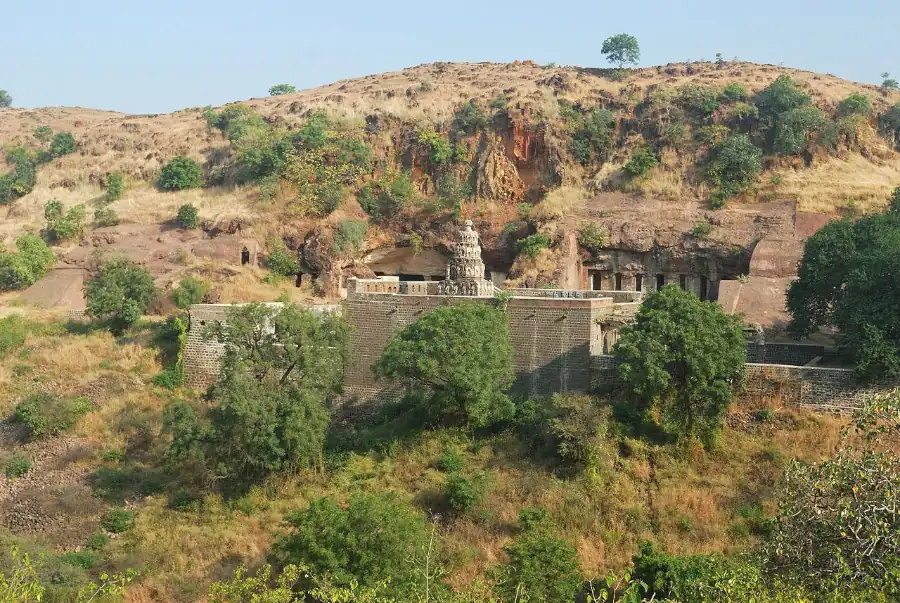
Situated just 8 kilometers from the heart of Osmanabad city, the Dharashiv Caves are a magnificent group of seven rock-cut caves carved into the Balaghat mountain range. Giving the city of Dharashiv its new official name, these ancient rock structures represent a harmonized blend of Buddhist and Jain heritage dating back centuries.
Key Highlights
- Seven distinct rock-cut caves featuring intricate pillars and monastic cells.
- Cave No. 2 is the largest and most impressive, boasting a grand hall supported by 20 pillars and a seated Buddha image.
- Panoramically located on a high ridge offering sweeping views of the surrounding countryside.
History & Significance
Archaeologists estimate that these caves were excavated around the 5th to 7th century AD during the Rastrakuta and Chalukya eras. While Cave 2 clearly exhibits classic Buddhist iconography, later caves (particularly Caves 3 and 4) were modified or dedicated to Jain traditions, featuring images of Tirthankaras like Lord Parshvanatha. This highlights the religious harmony prevalent in ancient Marathwada.
Things to Do
- Take a guided walk through the cave interiors to inspect ancient carvings and rock pillars.
- Hike up the gentle rock steps for breathtaking sunset views over the Marathwada landscape.
- Capture photographically stunning architectural details of the ancient rock facades.
Visitor Info
- Timings: 9:00 AM – 6:00 PM.
- Entry Fee: Free.
- Ideal Duration: 1.5 to 2 hours.
3. Naldurg Fort

Naldurg Fort is arguably one of the most visually captivating land-cum-river forts in all of Western India. Located approximately 45 kilometers from Osmanabad town on the Solapur-Hyderabad highway, this colossal fort spans nearly 3 kilometers in perimeter and is globally renowned for its ingenious water engineering masterpiece—the Nar-Madi Waterfalls.
Key Highlights
- Pani Mahal & Nar-Madi Waterfalls: A water dam pavilion constructed over the Bori River that channels water through two outlets named 'Nar' (Male) and 'Madi' (Female), creating a spectacular man-made waterfall during monsoon season.
- Massive stone bastions including the iconic Upali Buruj (a 80-foot high observation tower).
- Preserved medieval cannons placed strategically along the fortified ramparts.
History & Significance
Originally built by a local Hindu king named Nalaraja, the fort was subsequently expanded during the Bahmani, Adil Shahi, and Mughal eras. Ibrahim Adil Shah II made significant architectural upgrades, including the construction of the famous Pani Mahal in 1613 AD. The fort witnessed numerous decisive battles between the Deccan Sultans and Maratha forces.
Things to Do
- Visit during the monsoons (July to October) to see the breathtaking Nar-Madi waterfalls overflowing from the dam structure.
- Climb to the top of Upali Buruj for a panoramic 360-degree view of the fort grounds and river valley.
- Explore the inner royal enclosures, ammunition stores, and elephant stables.
Visitor Info
- Timings: 9:00 AM – 5:30 PM.
- Entry Fee: ₹20 – ₹50 per person.
- Ideal Duration: 2.5 to 3 hours.
4. Paranda Fort

Located in the Paranda taluka, about 85 kilometers from Osmanabad city, Paranda Fort is an outstanding example of late medieval military fortification. Built on flat terrain, this majestic fort exhibits a double layer of defense walls, broad moats, and unusually well-preserved defensive cannons that provide an authentic look into 16th-century warfare tactics.
Key Highlights
- Remarkably thick outer double walls fortified with 26 curved bastions.
- Extensive collection of historic cannons intact on top of bastions, including the famous 'Malik-i-Maidan' style heavy artillery pieces.
- In-fort structures including a ruined palace, mosque, stepwells, and ancient temple ruins.
History & Significance
Built by Mahmud Gawan, the famous Prime Minister of the Bahmani Sultanate in the late 15th century, Paranda Fort served as a crucial military outpost shielding the border regions. Over the centuries, control shifted between the Nizam Shahis of Ahmednagar, the Adil Shahis of Bijapur, the Mughals, and finally the Marathas. Its architectural design focuses heavily on heavy artilleries, deep moats filled with water, and deceptive entry gateways.
Things to Do
- Inspect the heavy bronze cannons perched on various bastions up close.
- Walk along the inner moat path and admire the structural resilience of the ancient basalt masonry.
- Photograph the intricate carving work present on the fort's arches and surviving mosque walls.
Visitor Info
- Timings: 8:00 AM – 6:00 PM.
- Entry Fee: Free.
- Ideal Duration: 1.5 to 2 hours.
5. Saint Goroba Kaka Temple & Museum, Ter
.jpg)
Ter, a serene historic village situated about 18 kilometers northeast of Osmanabad, holds immense dual significance. Spiritually, it is the abode of Sant Goroba Kaka, a legendary 13th-century potter-saint of the Varkari tradition. Archaeologically, ancient Ter (known historically as 'Tagara') was a thriving international trade hub during the Satavahana period, trading with the Roman Empire.
Key Highlights
- The peaceful Samadhi Mandir dedicated to Sant Goroba Kaka, built in warm stone along the banks of the Terna River.
- The Ramlingappa Lamture Museum in Ter, housing ancient Roman coins, clay figurines, ivory items, and Satavahana-era artifacts excavated locally.
- Trivikram Temple in Ter—one of the oldest surviving brick temple structures in India dating back to the 2nd century BC/AD.
History & Significance
Sant Goroba Kaka was a devoted follower of Lord Vitthal whose devotional Abhangas (hymns) remain deeply embedded in Maharashtrian culture. Simultaneously, ancient Tagara (Ter) was mentioned in the famous Greco-Roman navigation text 'Periplus of the Erythraean Sea' as a major inland trade hub supplying textiles and ivory products to classical Europe.
Things to Do
- Offer respects at Sant Goroba Kaka Temple and experience the quiet spiritual vibe by the riverbank.
- Visit the Archaeological Museum in Ter to witness actual Roman coins and ancient terracotta art discovered during local digs.
- Examine the ancient brick architecure of the nearby Trivikram Temple.
Visitor Info
- Timings: 6:00 AM – 8:00 PM (Temple); 10:00 AM – 5:00 PM (Museum, closed Mondays).
- Entry Fee: Free (Nominal fee for museum).
- Ideal Duration: 2 to 3 hours (combining temple and museum).
Best Time to Visit Osmanabad
Choosing the right season is crucial to enjoying your trip to Osmanabad, as summer temperatures in Marathwada can soar past 40°C. Here is a breakdown of what to expect during different seasons:
- Winter (October to March) - BEST TIME: Winter is undoubtedly the pleasantest time to visit top tourist places in Osmanabad. Temperatures range comfortably between 15°C and 28°C, making fort exploration and temple visits comfortable and enjoyable.
- Monsoon (July to September) - EXCELLENT FOR FORTS: Monsoon brings lush green landscapes and fills river basins. This is the absolute best time to visit Naldurg Fort to witness the legendary Nar-Madi waterfalls in full overflow.
- Summer (April to June) - AVOID IF POSSIBLE: Summers are hot, dry, and intense in Marathwada. Sightseeing during mid-day can be exhausting, though early morning visits to temples are still manageable.
How to Reach Osmanabad
Osmanabad is well connected to major cities in Maharashtra and neighboring states through an established network of roads and rail lines.
By Air
The nearest commercial airports are:
- Solapur Airport (SLP): Approx. 70 km away (limited regional connections).
- Chhatrapati Sambhajinagar / Aurangabad Airport (IXU): Approx. 230 km away.
- Pune International Airport (PNQ): Approx. 260 km away, offering major national flights. You can easily rent a taxi or take a state transport bus from Pune to Osmanabad.
By Train
Osmanabad has its own railway station (Station code: UMD), which connects directly to key cities like Pune, Mumbai, Solapur, Hyderabad, and Kolhapur. Solapur Junction (SUR) is another major nearby hub situated 70 km away with frequent superfast trains across India.
By Road
National Highway 52 (NH 52) runs directly through Osmanabad, connecting it smoothly to Solapur, Dhule, and Hyderabad. Maharashtra State Road Transport Corporation (MSRTC) operates frequent express buses connecting Osmanabad to Pune, Mumbai, Satara, Ahmednagar, and Sambhajinagar.
Local Food & Culinary Experiences
Marathwada cuisine is rich, robust, and loaded with earthy spices. Food lovers visiting Osmanabad shouldn't miss these local specialties:
- Pithla Bhakri with Solapuri Shenga Chutney: A comforting dish made from gram flour (Pithla) served hot alongside jowar or bajra bhakri, raw onions, and signature spicy garlic-peanut dry chutney.
- Kandi Peda from Tuljapur: Rich, caramel-colored milk pedas sold fresh near the Tuljapur Bhavani temple complex. It is the signature sweet offering (Prasad) of the region.
- Marathwada Mutton or Chicken Curry (Kala Rassa): A dark, aromatic curry crafted using toasted dry coconut, sesame, and dark roasted spices, perfect for lovers of spicy non-vegetarian food.
- Hurda (Seasonal Winter Specialty): If traveling between December and February, try fresh tender green jowar roasted over hot charcoal pits served with fresh coconut and garlic chutney.
10 Essential Travel Tips for Osmanabad
- Dress Modestly at Religious Sites: Tuljapur Bhavani Temple and Sant Goroba Kaka Temple require decent attire covering shoulders and knees.
- Wear Sturdy Walking Shoes: Forts like Naldurg and Paranda feature rough stone steps and wide open walking tracks; comfortable footwear is essential.
- Carry Adequate Cash: While UPI payments work in main towns, smaller roadside eateries, rural buses, and entry counters near remote sites prefer cash.
- Plan Around Festival Rush: Tuljapur gets exceptionally crowded during Navratri (September/October) and Koyla Purnima. Book accommodations well in advance if traveling during festivals.
- Hire Local Guides at Forts: Navigating complex forts like Naldurg or Paranda becomes tenfold richer when a local guide points out hidden water systems and hidden escape tunnels.
- Stay Hydrated: Carry reusable water bottles, especially when exploring open fort grounds and rock caves under the sun.
- Monsoon Safety: Slippery moss can collect near Naldurg Fort waterfalls during rains; watch your step near wet stone walls.
- Respect Photography Regulations: Avoid flash photography inside ancient cave interiors (Dharashiv) and respect sanctum restrictions inside shrines.
- Buy Local Souvenirs: Don't forget to purchase homemade Solapuri/Osmanabad dry peanut chutneys, handloom fabrics, and traditional brassware souvenirs in local markets.
- Rent a Private Taxi for Efficiency: While MSRTC public buses connect all major towns, hiring a local taxi for 1-2 days makes moving between dispersed spots like Paranda, Ter, and Naldurg much quicker.
Suggested 2-Day Osmanabad Itinerary
| Day & Time | Planned Activity |
|---|---|
| Day 1: Morning | Arrive in Osmanabad/Dharashiv. Check into your hotel. Head early to explore Dharashiv Caves to enjoy quiet morning views. |
| Day 1: Afternoon | Drive to Ter Village (18 km). Visit the historic Sant Goroba Kaka Temple, Trivikram Temple, and explore ancient Satavahana artifacts at the Lamture Museum. |
| Day 1: Evening | Travel to Tuljapur (45 km). Participate in the evening Aarti at Tuljapur Bhavani Temple and sample fresh Kandi Pedas from local sweet shops. Overnight stay in Tuljapur or Osmanabad. |
| Day 2: Morning | Drive to the grand Naldurg Fort (approx. 45 km from Osmanabad). Spend 3 hours exploring Pani Mahal, bastions, and the Nar-Madi waterfall view points. |
| Day 2: Afternoon | Enjoy an authentic spicy Marathwada thali lunch. Drive toward Paranda Fort (approx. 85 km) to explore its intact cannons, double walls, and moat defense layout. |
| Day 2: Evening | Return to Osmanabad town for souvenir shopping in local markets before catching your evening train or bus onward. |
Frequently Asked Questions (FAQs)
1. Is Osmanabad and Dharashiv the same place?
Yes, Osmanabad district and city have been officially renamed Dharashiv by the Government of Maharashtra. The new name pays homage to the ancient 6th-century rock-cut Dharashiv Caves located near the town.
2. What is Naldurg Fort famous for?
Naldurg Fort is world-famous for its 'Pani Mahal' dam engineering and the unique 'Nar-Madi' man-made twin waterfalls created over the Bori River, which overflow spectacularly during the rainy season.
3. How far is Tuljapur from Osmanabad city?
Tuljapur is located approximately 45 kilometers south of Osmanabad town and takes about 45 to 60 minutes to reach by road via NH 52.
4. Are Dharashiv Caves difficult to climb?
No, Dharashiv Caves are easily accessible via a short set of carved stone stairs leading up from the vehicle parking area. It is manageable for visitors of basic fitness levels.
5. Can I visit all major places in Osmanabad in two days?
Yes, a 2-day itinerary is perfectly sufficient to explore the top 5 tourist places in Osmanabad, including Tuljapur Temple, Dharashiv Caves, Naldurg Fort, Paranda Fort, and Ter Village, provided you travel by car or private taxi.
6. What is the best season to see the waterfalls at Naldurg Fort?
The best time to see the Nar-Madi waterfalls at Naldurg Fort is during the peak monsoon season between August and October, when rainfall fills the upstream Bori River dam.
7. What sweet treat is famous in Tuljapur?
Tuljapur is famous for its fresh, caramelized Kandi Peda, prepared from milk khoya and crushed cardamoms. It is traditionally bought by pilgrims as sacred Prasad.
8. Are hotels easily available near Tuljapur and Osmanabad?
Yes, both Osmanabad town and Tuljapur offer numerous budget hotels, pilgrim lodges (Bhakta Niwas), and family-run guest houses. Advance booking is recommended during Navratri and major long weekends.
Conclusion
Osmanabad (Dharashiv) is a land where history isn't just trapped inside textbooks—it comes alive on mountain ridges, medieval bastions, and stone temple courtyards. Whether you are marveling at the incredible military design of Naldurg Fort, soaking in the calm spiritual environment at Sant Goroba Kaka's shrine in Ter, or seeking blessings at Tuljapur Bhavani Temple, this underrated district in Marathwada offers a rich travel experience far away from overcrowded commercial tourist traps.
With its warm local hospitality, flavorful rustic Maharashtrian food, and fascinating ancient heritage, a weekend trip to Osmanabad makes for an unforgettable journey. Pack your comfortable walking shoes, charge your camera, and step out to discover the top tourist places in Osmanabad on your next vacation in Maharashtra!



0 Comments