
Sacred Footprints and Timeless Enlightenment: An Insider Guide to Gaya, Bihar, India
Few places on earth hold such immense spiritual gravity as the ancient district of Gaya, situated along the tranquil banks of the holy Falgu River in southern Bihar. For thousands of years, seekers, philosophers, emperors, and pilgrims have journeyed here in search of release, truth, and redemption. Gaya carries a dual personality that is rare in travel: on one hand, it is one of Hinduism's most sacred pilgrimage grounds, sanctified by Lord Vishnu and celebrated as the prime location for performing ancestral Pind Daan rituals; on the other hand, its international suburb of Bodh Gaya serves as the quiet epicenter of world Buddhism, the revered land where Prince Siddhartha Gautama meditated beneath the sacred fig tree and attained supreme enlightenment as the Buddha.
Wandering through Gaya reveals an evocative sensory landscape. The fragrance of burning sandalwood, champa incense, and butter lamps drifts through millennia-old stone sanctums, while the soft, rhythmic hum of Buddhist monastic chants harmonizes with traditional Sanskrit recitations. Beyond its spiritual weight, Gaya presents rugged granite hills, cave-riddled ridges, exquisite regional architecture, and a rich culinary scene anchored by the irresistible aroma of sesame-laced tilkut. The town remains remarkably grounded, offering visitors a raw, authentic glimpse into Indian heritage untouched by superficial tourism.
Whether you are on an inward spiritual quest, a deep architectural expedition, or a simple journey across the historic heart of northern India, discovering the best places to visit in Gaya will leave you moved and inspired. In this comprehensive travel guide, we unpack the top tourist places in Gaya, explore essential practical details, and reveal how to experience this soul-stirring district like a seasoned traveler.
Table of Contents
- 1. Mahabodhi Temple Complex
- 2. Vishnupad Temple and Falgu River
- 3. The Great Buddha Statue (Daibutsu)
- 4. Dungeshwari Cave Temples (Mahakala Caves)
- 5. Mangla Gauri Temple
- Best Time to Visit Gaya
- How to Reach Gaya
- Local Delicacies to Savor
- 10 Essential Travel Tips for Gaya
- Suggested 2-Day Gaya Itinerary
- Frequently Asked Questions
- Conclusion
1. Mahabodhi Temple Complex, Bodh Gaya

Overview
Recognized globally as a UNESCO World Heritage Site, the Mahabodhi Temple stands on the very spot where Siddhartha Gautama transformed into the Buddha around 500 BCE. Soaring fifty meters into the sky, the main grand pyramidal spire, adorned with classical Gupta-era brickwork and intricate stone carvings, anchors an expansive landscaped park that welcomes pilgrims from Japan, Thailand, Sri Lanka, Bhutan, Tibet, and every corner of the globe.
Why You Must Visit
The atmosphere here is undeniably peaceful. Behind the temple stands the direct descendant of the original Bodhi Tree (Ficus religiosa), sheltering the ancient Vajrasana or Diamond Throne erected by Emperor Ashoka in the third century BCE. Watching monks dressed in maroon, saffron, and cream robes perform deep prostrations in the gentle morning breeze is one of the most serene cultural sights in India.
Key Highlights
- The Sacred Bodhi Tree: Spend quiet moments under the sprawling branches where the fundamental teachings of Buddhism took root.
- Vajrasana (Diamond Throne): The stone platform marking the exact seat of Gautama's enlightenment.
- Animesh Lochan Chaitya: The small stupa where the Buddha spent an entire week gazing unblinkingly at the Bodhi Tree in silent gratitude.
- Lotus Pond (Muchalinda Lake): Featuring a striking statue of the Naga King Muchalinda shielding the meditating Buddha from a raging storm.
Timings, Entry Fee, and Logistics
Timings: 5:00 AM to 9:00 PM daily. Early morning (5:30 AM to 7:00 AM) and evening chanting hours (6:00 PM to 8:00 PM) offer the most moving ambiance.
Entry Fee: Admission is free. Mobile phones are strictly prohibited and must be deposited in security lockers outside. Traditional still cameras and video cameras require a nominal permit fee of ₹100 and ₹300, respectively.
Dress Code: Modest dress covering shoulders and knees is mandatory. Shoes must be removed at the outer cloakroom.
2. Vishnupad Temple and the Sacred Falgu River
Overview
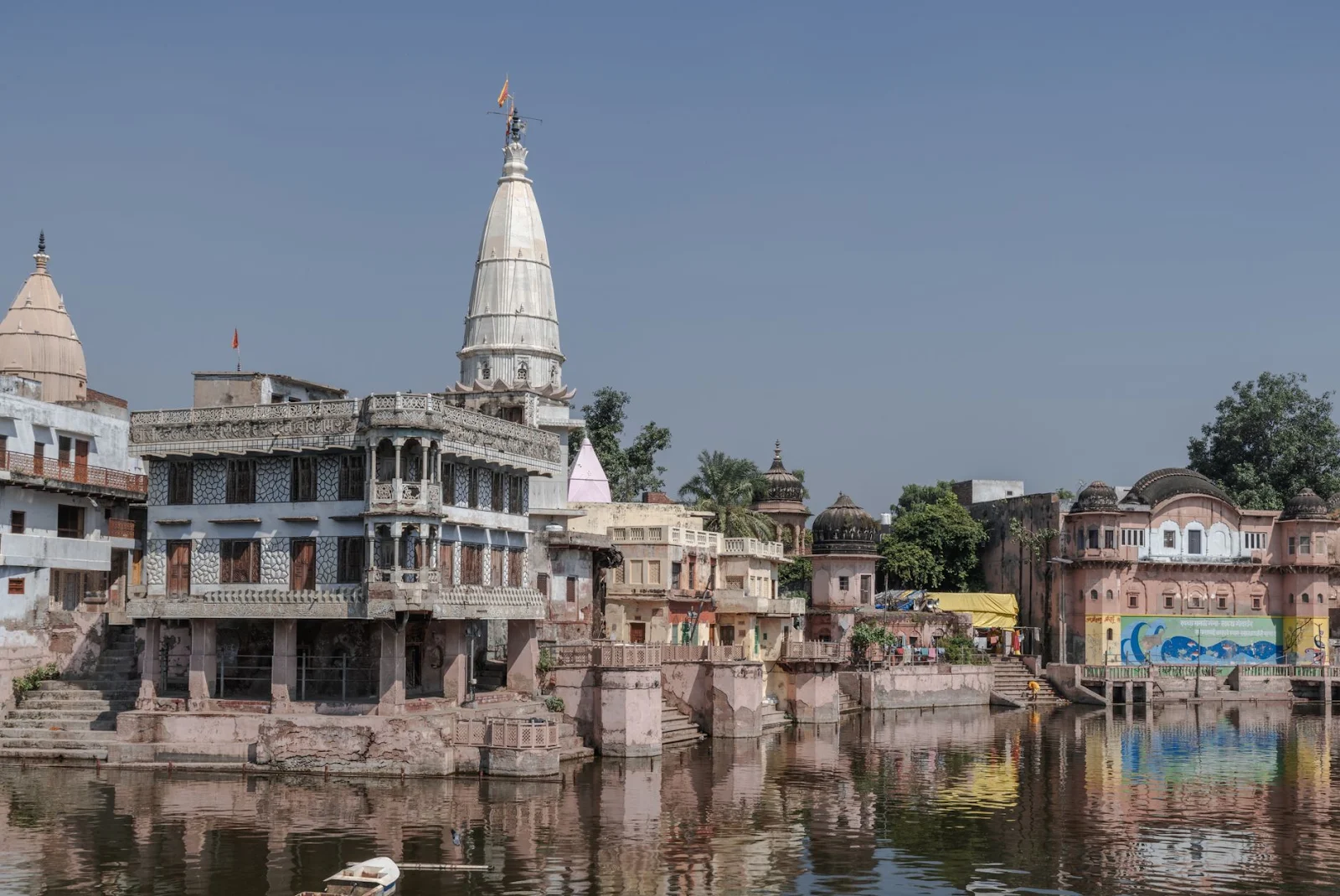
Located in the heart of old Gaya city along the banks of the Falgu River, Vishnupad Temple is among the most revered Hindu pilgrimage shrines in India. Reconstructed in 1787 by the benevolent Queen Ahilyabai Holkar of Indore, the temple showcases exquisite grey granite stonework, carved pillars, and an imposing octagonal tower crowned with an eight-metal flag (Ashtadhatu dhwaja).
Why You Must Visit
The inner sanctum enshrines the Dharmasila, a forty-centimeter-long footprint of Lord Vishnu stamped into solid basalt rock, commemorating his victory over the demon Gayasura. For devout Hindus, this temple forms the center of the timeless Pind Daan ceremony, an elaborate ritual designed to help departed ancestors achieve moksha (liberation). Observing the devotion of family lineages arriving from all Indian states offers a profound cultural perspective.
Key Highlights
- The Sacred Footprint: The central basalt imprint of Lord Vishnu, decorated with fresh tulsi leaves, chandan, and offerings.
- The Immortal Banyan (Akshayavat): An ancient sacred banyan tree nearby where pilgrims complete final ancestral offerings.
- Falgu River Ghats: The unique sand-bed river where water often flows beneath the surface due to an ancient mythological curse, creating serene sandy banks lined with historic stone steps.
Timings, Entry Fee, and Logistics
Timings: Open daily from 5:00 AM to 9:00 PM.
Entry Fee: Free entry. Priests (Pandas) may approach offering rituals; politely decline if you only wish to tour the premises.
Visitor Note: Non-Hindus are permitted inside the temple courtyard to appreciate the architecture, but access to the innermost sanctum may be restricted during crowded religious festivals like the annual Pitru Paksha Mela.
3. The Great Buddha Statue (Daibutsu)
Overview
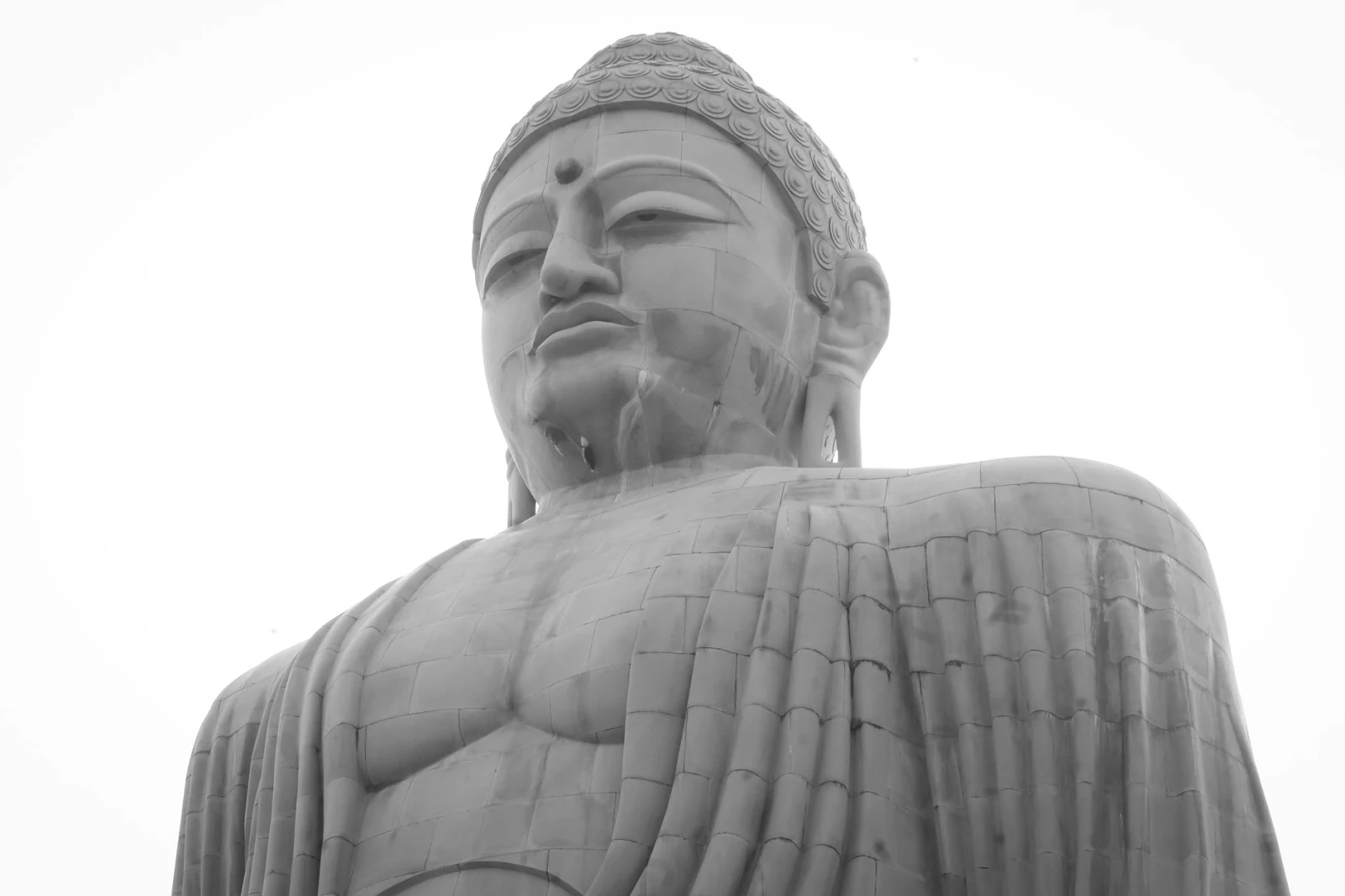
Standing tall in Bodh Gaya, the Great Buddha Statue, locally known as Daibutsu, reaches an impressive height of 80 feet (25 meters). Unveiled in 1989 by the 14th Dalai Lama, this colossal sculpture depicts Lord Buddha sitting serenely in the dhyana mudra (meditation posture) atop an enormous blooming lotus petal.
Why You Must Visit
Carved from red granite and sandstone blocks with the assistance of master sculptors from Japan and India, the statue stands as a monumental masterpiece of modern spiritual art. Surrounding the towering central figure are ten smaller standing sandstone statues representing the primary disciples of the Buddha, including Sariputta, Mahamoggallana, and Ananda. The manicured garden creates a contemplative, quiet oasis away from city traffic.
Key Highlights
- Monolithic Presence: The sheer scale of the statue, which required seven years of painstaking quarrying and assembly to complete.
- Hollow Interior Sanctum: Inside the statue rests an inner spiral staircase running up to the chest level, containing miniature bronze statues and sacred Buddhist scriptures (accessible during special religious events).
- Peace Garden: Clean walkways framed by seasonal flowerbeds and prayer spaces.
Timings, Entry Fee, and Logistics
Timings: 7:00 AM to 12:00 PM, and 2:00 PM to 6:00 PM (winter closes at 5:30 PM).
Entry Fee: Completely free for all visitors.
Photography: Photography is permitted without restrictions, making it an excellent stop for travel photographers seeking golden hour reflections.
4. Dungeshwari Cave Temples (Mahakala Caves)

Overview
Situated around twelve kilometers northeast of Bodh Gaya across the Falgu River basin rise the rugged Dungeshwari Hills. Tucked into these rocky cliffs are the austere Dungeshwari Cave Temples, where Siddhartha Gautama spent six rigorous years practicing severe self-mortification and extreme asceticism before realizing that self-deprivation was not the road to spiritual freedom.
Why You Must Visit
Dungeshwari presents a stark, unpolished setting compared to the manicured temples on the valley floor. Inside the main cave shrine sits an evocative dark golden statue of an emaciated, skeletal Gautama, showing exposed ribs and sunken eyes—a rare depiction illustrating his extreme penance. The site carries immense historical weight, offering a quiet mountaintop retreat that allows travelers to step directly into the physical geography of ancient India.
Key Highlights
- The Emaciated Buddha Sanctum: A rare, moving portrayal of ascetic Gautama alongside an image of the Hindu goddess Dungeshwari.
- Sujata Stupa Link: From the mountain summit, look across the valley toward the Sujata Kuti, dedicated to the village maiden who offered milk-rice porridge to break the future Buddha's fasting.
- Panoramic Views: Sweeping vantage points over the surrounding Bihari countryside, small farms, and rural villages.
Timings, Entry Fee, and Logistics
Timings: 6:00 AM to 5:30 PM.
Entry Fee: Free.
Access: Reaching the caves involves climbing a winding paved stone path (approximately 15–20 minutes) up the hillside. Wear comfortable walking shoes with good grip and carry sufficient drinking water.
5. Mangla Gauri Temple

Overview
Perched high on the Bhasmakut Hill in Gaya city, Mangla Gauri Temple is celebrated as one of the fifty-one sacred Maha Shakti Peethas of Hinduism. According to the ancient Puranas, it is the hallowed site where the breast of Goddess Sati fell while Lord Shiva carried her body across the heavens in grief. The temple dates back to the 15th century, with roots extending well into the early centuries of the first millennium.
Why You Must Visit
Mangla Gauri is revered as a temple of benevolence and fulfillment. The sanctum holds no conventional marble idol; instead, devotees revere a naturally occurring stone formation symbolizing the maternal nurturing aspect of the Divine Mother. The steps ascending Bhasmakut Hill wind past small, centuries-old shrines dedicated to Lord Ganesha, Lord Shiva, and Kal Bhairav, providing a vibrant, authentic neighborhood worship experience.
Key Highlights
- Sanctum of the Shakti Peetha: The subterranean stone chamber where quiet lamps illuminate the sacred natural rock shrine.
- Ancient Carved Mandapa: Stone pillars exhibiting traditional eastern Indian brick and stone construction techniques.
- Hilltop Vistas: Panoramic vantage points overlooking the dense streets, winding alleys, and brick rooftops of Old Gaya.
Timings, Entry Fee, and Logistics
Timings: 5:00 AM to 1:00 PM, and 4:00 PM to 8:30 PM. Tuesdays are considered exceptionally auspicious and experience large gatherings of devotees.
Entry Fee: Free entry.
Access: The climb entails approximately 150 stone steps. For elderly travelers or those with mobility concerns, local e-rickshaws can navigate narrow roads that reach relatively close to the secondary hillside entrance.
Best Time to Visit Gaya
Gaya experiences an extreme sub-tropical continental climate, characterized by scorching summers and pleasant, cool winters. Planning your itinerary around seasonal transitions ensures an enjoyable travel experience:
- October to March (Peak Season): The winter months are undoubtedly the best time to explore Gaya. Temperatures hover comfortably between 10°C and 25°C, making walking tours and hill climbs enjoyable. Bodh Gaya is especially vibrant during this window, with international Buddhist delegations, teachings, and festivals filling the town.
- April to June (Summer): Harsh and dry, with daily temperatures often surpassing 42°C. Outdoor exploration during midday is exhausting and best avoided unless you are traveling on specific religious dates like Buddha Purnima (which falls in May).
- July to September (Monsoon): The rains transform the surrounding countryside into lush green fields. While humidity remains high, the river swells and the tourist crowds thin considerably, allowing for a quiet, contemplative journey.
How to Reach Gaya
Gaya is well-connected by road, rail, and air, serving as one of the primary transport junctions in Bihar.
- By Air: Gaya International Airport (GAY) is located roughly 7 km from Bodh Gaya and 12 km from Gaya City. It operates seasonal direct international flights from Buddhist nations like Thailand, Myanmar, and Sri Lanka, alongside domestic connections to Delhi and Kolkata. Alternatively, Patna's Jay Prakash Narayan Airport (PAT) is approximately 110 km away and offers frequent domestic flights.
- By Train: Gaya Junction (GAYA) is a major stop on the Grand Chord railway line connecting New Delhi, Kolkata, and Varanasi. Prestigious trains including multiple Rajdhani, Vande Bharat, and express services halt here daily.
- By Road: Gaya connects easily to Patna (3 hours via NH 22), Rajgir (2 hours), Varanasi (5 hours via Grand Trunk Road / NH 19), and Nalanda. Reliable state buses, luxury sleeper coaches, and private taxis run consistently between these key cities.
Local Delicacies to Savor in Gaya
Culinary heritage in Gaya is rooted in time-tested Bihari traditions, centered around regional grains, slow-roasting techniques, and jaggery-infused confections. Make sure to sample these authentic regional specialties:
- Gaya Tilkut: Gaya's undisputed culinary gift to the subcontinent. Made by laboriously pounding roasted white sesame seeds with melted sugar or winter jaggery (gur), authentic Gaya tilkut is impossibly crisp, flaky, and melts instantly on the tongue. The Ramna and Tekari Road areas are famous for the finest freshly prepared batches.
- Anarsa: A traditional sweet crafted from fermented rice flour, jaggery, and curd, rolled in white sesame seeds and deep-fried in rich ghee. You can choose between flat discs or small round balls stuffed with reduced milk (mava).
- Litti Chokha: The quintessential dish of Bihar. Dough balls made of whole wheat flour stuffed with spiced roasted gram flour (sattu) are roasted over charcoal or dried cow dung embers, submerged in fragrant desi ghee, and served with mashed spiced brinjal and potatoes.
- Kesariya Peda: Gaya produces remarkable milk-fudge confections, particularly near the Vishnupad temple, flavored with green cardamom and saffron.
10 Essential Travel Tips for Gaya
- Segregate Your Bases: While Gaya city and Bodh Gaya are only 12 km apart, their environments differ drastically. Bodh Gaya offers serene boutique hotels, international monasteries, and peaceful cafes, making it the preferable base for international and leisure travelers.
- Respect Sacred Protocols: Always take off your footwear before stepping onto temple flags, sanctum verandas, or monastery grounds. Carry slip-on shoes to avoid hassle.
- Prepare for Electronic Bans: At the Mahabodhi Temple, security is tight; all mobile phones, smartwatches, and power banks must be checked at the cloakroom. Plan ahead if you need to coordinate with traveling companions.
- Dress Conservatively: Both Buddhist and Hindu shrines in Gaya are active places of worship. Dress in modest attire that covers shoulders, upper arms, and knees.
- Bargain for Local Transport: Auto-rickshaws and e-rickshaws (Tuk-Tuks) are the primary way to get around. Agree firmly on the fare before boarding, or ask your hotel desk for standard prevailing rates.
- Beware of Aggressive Ritual Touts: In the vicinity of the Vishnupad Temple and the Falgu Ghats, self-appointed priests may promise special ceremonies. Remain polite but firm if you do not require religious services.
- Carry Sufficient Cash: While digital payments (UPI) are common, smaller roadside confectioners, rickshaw operators, and rural shrines often accept cash only.
- Hydrate During Hill Climbs: Climbing Dungeshwari and Mangla Gauri involves open staircases that catch direct sunlight. Carry a refillable water bottle and sun protection.
- Explore the International Monasteries: Dedicate an afternoon in Bodh Gaya to visiting the Thai Monastery, Royal Bhutanese Temple, Japanese Indosan Nipponji, and Tibetan Monasteries, each designed in authentic traditional vernacular styles.
- Sample Tilkut Fresh: If traveling between November and February, purchase tilkut directly from open workshops where master confectioners pound it hot; the flavor is far superior to pre-packaged shelf varieties.
Suggested 2-Day Gaya Itinerary
Day 1: The Enlightenment Circuit (Bodh Gaya)
- Morning (6:00 AM – 9:00 AM): Begin with early morning meditation and an unhurried walking tour of the Mahabodhi Temple Complex. Admire the Bodhi Tree in the peaceful dawn light before day-trippers arrive.
- Midday (9:30 AM – 1:00 PM): Visit the Great Buddha Statue (Daibutsu) and explore nearby foreign monasteries, including the Thai Temple with its gold-leaf sloping roof and the peaceful Japanese Indosan Temple.
- Afternoon (2:30 PM – 5:30 PM): Take a scenic auto-rickshaw drive across the river plain to the Dungeshwari Cave Temples. Climb the rocky slopes to reflect in the quiet caves of the ascetic Buddha.
- Evening (6:30 PM – 8:30 PM): Return to Bodh Gaya to stroll through the colorful local night markets, picking up Tibetan singing bowls, prayer flags, and authentic handicraft keepsakes.
Day 2: Sacred Heritage and Ancient Shrines (Gaya City)
- Morning (7:00 AM – 10:00 AM): Head into central Gaya city to explore the grand architecture of the Vishnupad Temple. Walk out onto the Falgu River ghats to witness timeless ancestral rites.
- Late Morning (10:30 AM – 12:30 PM): Ascend Bhasmakut Hill to experience the vibrant energy and historical sanctity of the Mangla Gauri Temple.
- Afternoon (1:00 PM – 3:30 PM): Enjoy an authentic regional lunch of hot Litti Chokha, followed by a walk through Ramna bazaar to pick up freshly pounded Gaya Tilkut and Anarsa.
- Late Afternoon (4:00 PM – 6:00 PM): Stop by the Sujata Kuti Stupa on your return route to Bodh Gaya, soaking in the countryside scenery at sunset.
Frequently Asked Questions
1. Are Gaya and Bodh Gaya the same place?

No, they are distinct towns located about 12 kilometers apart within the same district. Gaya is an ancient, bustling city centered around orthodox Hindu pilgrimage sites like Vishnupad Temple, whereas Bodh Gaya is a quieter international town centered around Buddhism and the Mahabodhi Temple.
2. How many days are needed to explore Gaya adequately?

A well-planned two-day trip is ideal for visiting the primary religious, cultural, and historical highlights across both Bodh Gaya and Gaya city without rushing.
3. Can non-Hindus enter the Vishnupad Temple?

Non-Hindus are free to walk through the outer courtyard, marvel at the 18th-century granite stone carvings, and observe the surroundings. However, entry into the inner sanctum housing the sacred footprint is reserved for practicing Hindus.
4. Are mobile phones allowed inside the Mahabodhi Temple?

No. Due to security regulations, mobile phones are strictly prohibited within the Mahabodhi Temple Complex. Free, monitored lockers are available near the security checkpost at the main entrance.
5. What is the significance of Pind Daan in Gaya?

According to Hindu belief, performing Pind Daan (funeral offerings) on the banks of the sacred Falgu River and near the footprints of Lord Vishnu frees the souls of ancestors from the cycle of rebirth, granting them immediate salvation (moksha).
6. Is Bodh Gaya safe for solo travelers and women?

Yes, Bodh Gaya is widely regarded as safe for solo and international travelers. As with any travel destination, avoid poorly illuminated rural trails after dark and rely on verified auto-rickshaws or hotel-arranged transport for early morning journeys.
7. What is the best souvenir to bring home from Gaya?

Edible treats like fresh, flaky Gaya Tilkut, Anarsa, and Kesariya Peda make fantastic souvenirs. Additionally, Bodh Gaya's monastic markets offer exquisite brass Buddha figures, handmade incense, Tibetan prayer wheels, and Bodhi leaf artwork.
8. What is the local transport system like within Gaya?

Electric rickshaws (e-rickshaws) and auto-rickshaws are abundant and inexpensive. They provide the easiest way to navigate both the narrow lanes of Gaya city and the wider, monastery-lined roads of Bodh Gaya.
Conclusion
Gaya is far more than a typical transit stop on an Indian itinerary; it is an enduring sanctuary of devotion, peace, and spiritual heritage. Here, the deep contemplation of the Buddhist path blends seamlessly with the heartfelt devotion of Hindu rituals, creating an environment where life's fundamental questions have been contemplated for millennia. From the serene shade of the Mahabodhi Temple's sacred fig tree to the historic stone arches of Vishnupad and the quiet cliffs of Dungeshwari, visiting the top tourist places in Gaya offers a journey of contemplation and discovery. Take your time, walk the ancient stone paths with an open heart, and let the timeless spiritual energy of Bihar's most sacred district leave a lasting impression on your travels.



0 Comments