
Top 5 Places to Visit in West Singhbhum, Jharkhand: Uncharted Forests, Cascades, and Ancient Heritage
Tucked away in the southern expanse of Jharkhand, West Singhbhum is an untamed sanctuary where ancient geological formations meet whispering sal canopies and living tribal heritage. Unlike typical crowded tourist circuits, this district remains largely raw, mysterious, and profoundly peaceful. From Chaibasa, the administrative capital, the landscape ripples outward into rugged plateaus, perennial freshwater springs, and sweeping valleys that once sheltered prehistoric civilisations and early medieval kingdoms. Whether you are an adventurous road-tripper, a wildlife enthusiast, or someone seeking quiet respite far from urban chaos, planning a tour of West Singhbhum opens doors to some of Eastern India’s best-kept secrets.
The district is perhaps most famous for housing Saranda, Asia’s largest and densest continuous sal forest, celebrated in local folklore as the legendary "Land of Seven Hundred Hills." Yet, green hills and deep gorges are not its only gifts. Clear mountain rivers carve pathways through jagged rock to create thundering waterfalls like Hirni Falls, while tranquil historic hubs like Benisagar preserve intricately carved stone pantheons dating back to the fifth century CE. Meanwhile, sacred sites like Mahadev Sal weave spiritual fervor directly into the everyday rhythm of local Ho and Munda tribal communities.
If you are looking to discover the top tourist places in West Singhbhum, this in-depth guide provides everything you need to curate an unforgettable expedition. We break down the top five must-visit destinations, practical logistics, authentic local foods, transport routes, and insider travel advice to help you explore this fascinating corner of Jharkhand safely, responsibly, and with absolute confidence.
1. Saranda Forest and Kiriburu Hills

Why Visit Saranda Forest
Covering an astounding area of over 820 square kilometers, Saranda is rightfully crowned the "Land of Seven Hundred Hills." It is the largest shorea robusta (sal) forest reserve on the Asian continent. For generations, this dense wilderness served as the hunting grounds of Singh Deo royalty and the undisturbed homeland of the Ho indigenous tribe. Today, the reserve draws eco-travelers, botanists, and solitude-seekers eager to experience towering trees whose interlocking crowns filter the morning sun into emerald beams. The twin mining towns of Kiriburu and Meghahatuburu, perched at an elevation of roughly 850 meters above sea level, serve as the scenic gateways to this forest, offering cool mountain breezes and dramatic valley vistas that rival popular hill stations.
Key Attractions & Things to Do
Make your way up to the Meghahatuburu Sunset Point, where you can watch the evening sky melt into blazing shades of crimson and violet over endless rolling ridges. Wildlife lovers can embark on forest drives through designated safari zones to spot native inhabitants, including wild Asian elephants, leopards, sambar deer, barking deer, flying squirrels, and rare orchids. Birdwatchers will find paradise here, with frequent sightings of the Malabar pied hornbill, Asian emerald dove, and crested serpent eagle. While exploring, take time to visit the forest village fringes to understand the deep, nature-reverent customs of the indigenous Ho people.
Practical Details
- Entry Fee: No general entry fee for driving through township highways; forest department permits (₹50–₹100 per vehicle) are required for interior wildlife core zones and watchtowers.
- Timings: Dawn to dusk (6:00 AM to 5:30 PM). Driving inside remote forest interiors after sunset is strictly discouraged due to wildlife movements.
- Best Time to Visit: October to March, when daytime temperatures are pleasant and forest visibility is crisp.
- Ideal Duration: 1 to 2 full days.
- How to Reach: Located approximately 130 km southwest of Chaibasa and 60 km from Barbil (Odisha). Taxis and state buses run regularly from Chaibasa and Chakradharpur to Kiriburu.
2. Hirni Falls
Why Visit Hirni Falls
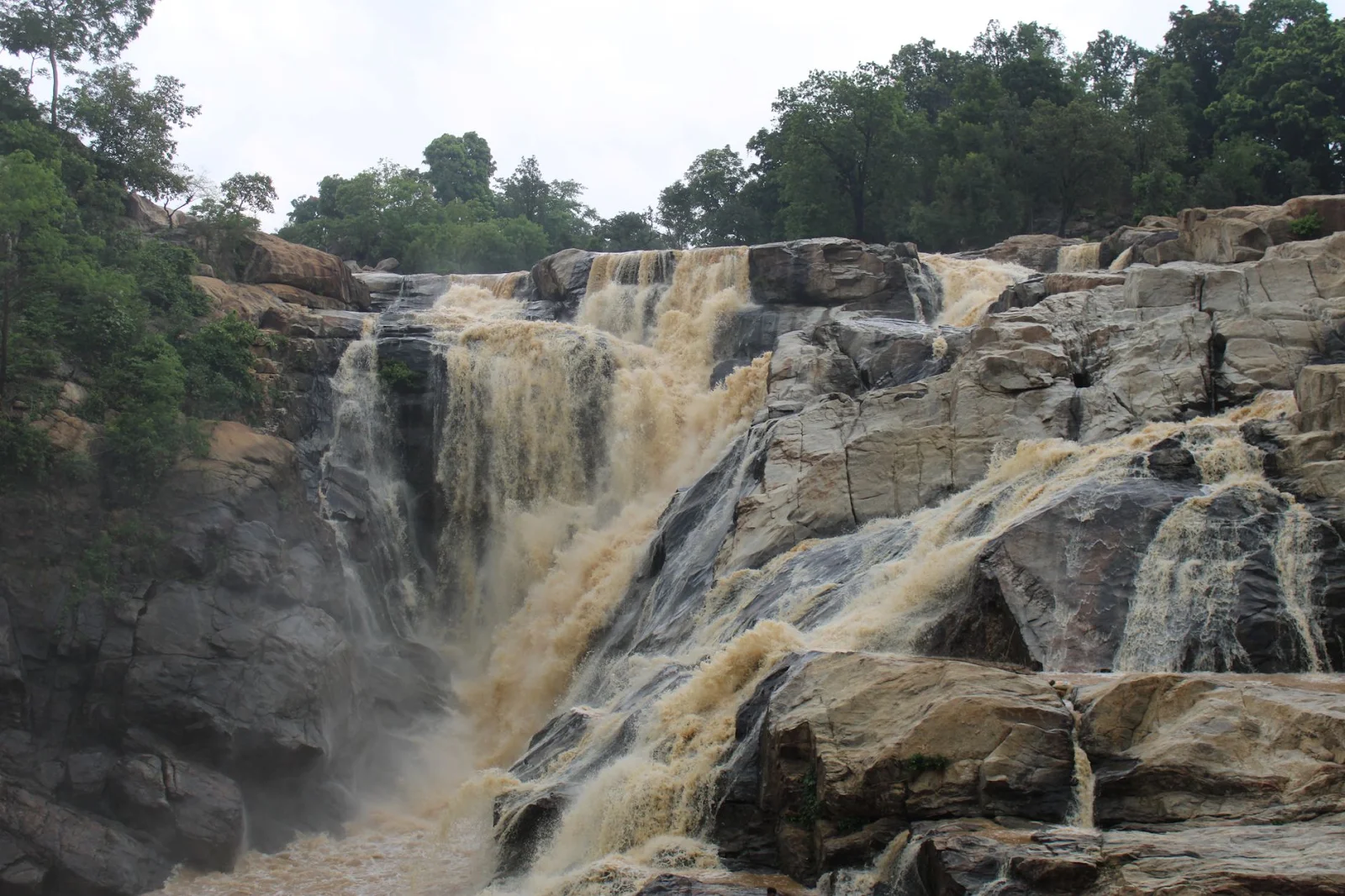
Located on the northern boundary of West Singhbhum near Bandgaon along the Ranchi-Chaibasa road, Hirni Falls is one of the district's most captivating natural spectacles. Here, the Ramgarha River rushes violently off the edge of a rocky escarpment, dropping nearly 37 meters (121 feet) into a churning pool surrounded by dense, untouched woods. Unlike urbanized recreational falls, Hirni maintains a primitive charm. The surrounding wilderness reverberates with the thunderous roar of plunging water, while fine mist settles across mossy boulders, creating a cool microclimate even during warmer afternoons.
Key Attractions & Things to Do
Climb the well-maintained flight of stone stairs leading to elevated viewing shelters built on opposite cliffs. These vantage points provide panoramic angles of the drop, showing the full force of the cascade framed against the forest canopy. Photographers will appreciate the morning hours when gentle light cuts through the rising mist to create fleeting rainbows across the pool. At the base, expansive shaded groves serve as popular spots for daytime family picnics. Nature walks along the banks of the downstream river reveal diverse riverine flora, freshwater fish, and vibrant forest butterflies.
Practical Details
- Entry Fee: Nominal entry fee of ₹10–₹20 per person; parking fee of ₹30–₹50 for four-wheelers.
- Timings: 8:00 AM to 5:00 PM daily.
- Best Time to Visit: August to January. The waterfall swells to dramatic proportions immediately after the monsoon rains and maintains steady flow through winter.
- Ideal Duration: 2 to 3 hours.
- How to Reach: Situated right off National Highway 75E, roughly 65 km north of Chaibasa and 70 km south of Ranchi. Private cabs and passenger buses operating between Ranchi and Chaibasa stop directly near the entrance gate.
3. Lupungutu Natural Spring

Why Visit Lupungutu
Just a short drive outside Chaibasa, Lupungutu is a quiet, revered nature haven celebrated for its perennial subterranean freshwater spring. The water bubbles upward constantly from underneath the root network of century-old Mahua and Arjun trees, filling a stone-lined basin before flowing outward into irrigation channels. What makes Lupungutu so fascinating to locals and visitors alike is that the spring water stays remarkably cool throughout the blistering summer heat, yet turns pleasantly lukewarm during the chill of winter. It has served as a rejuvenating water source and peaceful gathering place for surrounding communities for generations.
Key Attractions & Things to Do
Spend an unhurried morning relaxing in the deep shade cast by the sprawling canopy of Mahua groves. You can cup your hands to taste the pure, naturally filtered mineral water right at the source or dip your feet into the clear channels that meander through the stone steps. The serene atmosphere makes it a preferred retreat for reading, meditation, and outdoor picnics. A visit to Lupungutu also provides an authentic window into traditional tribal village life; during festive seasons, local residents gather here in colorful traditional attire for prayers and community meetings.
Practical Details
- Entry Fee: Free entry.
- Timings: Open throughout daylight hours (6:00 AM to 6:00 PM).
- Best Time to Visit: November to February for ideal picnic weather, or during early spring (March) when the surrounding Mahua trees begin their aromatic blossom cycle.
- Ideal Duration: 1 to 2 hours.
- How to Reach: Located merely 3 km from the heart of Chaibasa town. It can easily be reached via an autorickshaw, bicycle, or personal car within ten minutes.
4. Benisagar Archaeological Complex

Why Visit Benisagar
History buffs seeking offbeat archaeological sites should make a beeline for Benisagar, situated in the Majhgaon block near the Jharkhand-Odisha border. Maintained by the Archaeological Survey of India (ASI), this vast heritage landscape revolves around a colossal ancient water reservoir measuring roughly 340 meters by 350 meters. According to folklore and epigraphic research, the tank was excavated by King Benu in the late fifth or early sixth century CE. Recent scientific excavations carried out by the ASI unearthed dozens of stone temple foundations, panchayatana-style complexes, votive shrines, and masterfully sculpted deities, establishing Benisagar as a flourishing Shaivite and Shakta pilgrimage center in early medieval Eastern India.
Key Attractions & Things to Do
Wander through the excavated stone foundations and open-air sculpture yard to study exquisite stone reliefs of Lord Shiva, Agni, Surya, Ganesha, Mahishasuramardini, and Brahma, carved from local sandstone and granite. The craftsmanship displays intricate post-Gupta stylistic idioms that remain remarkably intact despite centuries of burial. Take a leisurely walk around the vast perimeter of the historical tank, where migrating waterfowl, kingfishers, and herons gather during winter months. The absolute quiet of this rural landscape makes it one of the most contemplative historical sites in Jharkhand.
Practical Details
- Entry Fee: Currently free for visitors; regulated by the ASI site office.
- Timings: 9:00 AM to 5:00 PM (Closed on prominent national holidays).
- Best Time to Visit: October to March, when the afternoon heat is mild enough for open-air site exploration.
- Ideal Duration: 2 to 3 hours.
- How to Reach: Located approximately 85 km south of Chaibasa and about 18 km from Karanjia (Odisha). The most convenient way to visit is by hiring a private vehicle from Chaibasa or Chakradharpur.
5. Mahadev Sal Temple, Goilkera

Why Visit Mahadev Sal
Deeply woven into the spiritual tapestry of West Singhbhum, Mahadev Sal is a renowned temple dedicated to Lord Shiva, situated near Goilkera amidst dense sal groves and the curving tracks of the South Eastern Railway. The temple’s origin is enveloped in remarkable folklore dating back to the late nineteenth century during the construction of the Howrah-Mumbai rail line. Legend holds that British rail engineers encountered an unyielding subterranean stone while excavating the path through the forest; attempting to cut it repeatedly caused miraculous occurrences, prompting laborers and local tribal villagers to enshrine the fractured Shivalinga right beside the tracks. Today, it stands as an enduring emblem of faith where regional folklore seamlessly blends with classical Shaivism.
Key Attractions & Things to Do
Offer your prayers at the sanctum sanctorum housing the holy Shivalinga. Even train drivers on the Howrah-Mumbai mainline are known to slow their locomotives as they pass the temple in homage. The temple comes alive in radiant devotion during the auspicious month of Shravan (July-August) and on Maha Shivratri, when tens of thousands of pilgrims (Kanwariyas) walk barefoot carrying holy water to anoint the deity. The surrounding forest riverbed and rocky streams offer an incredibly tranquil setting for meditation and peaceful riverfront walks after offering morning darshan.
Practical Details
- Entry Fee: Free entry. Special puja offerings are priced nominally.
- Timings: 5:00 AM to 8:30 PM daily.
- Best Time to Visit: October to March for pleasant sightseeing, or during July-August if you wish to witness the vibrant cultural spectacle of the Shravan Mela.
- Ideal Duration: 1 to 2 hours.
- How to Reach: Located roughly 50 km west of Chaibasa and just 3 km from the Goilkera Railway Station. Accessible easily by local passenger trains or via state road highways from Chakradharpur and Chaibasa.
Best Time to Visit West Singhbhum
Because West Singhbhum features dense forests, elevated plateaus, and rocky valleys, its climate changes sharply across seasons. Timing your journey properly ensures comfortable explorations and safe outdoor trails.
- Winter (October to February) - Peak Season: This is unequivocally the best time to visit West Singhbhum. Daytime temperatures hover between a comfortable 15°C and 25°C, while nights turn delightfully chilly (occasionally dropping down to 7°C to 10°C in the elevated forests of Kiriburu). Forest roads remain dry and accessible, skies are azure blue, and natural springs look their clearest.
- Monsoon (July to September) - Landscape Enthusiasts: The entire district transforms into an astonishing emerald paradise as the South-West monsoon drenches the sal valleys. Hirni Falls roars at its absolute maximum capacity. However, heavy rains can make interior unpaved forest trails slippery, and sudden water surges require extra caution near riverbanks.
- Summer (March to June) - Off Season: Summers in southern Jharkhand are hot and dry, with afternoon temperatures in Chaibasa frequently exceeding 40°C. While the Kiriburu hilltop maintains slightly cooler weather, exploring open archaeological sites like Benisagar can prove exhausting. If visiting during this time, keep outdoor activities restricted to early mornings.
How to Reach West Singhbhum
West Singhbhum is well-connected to major industrial hubs and capital cities across Eastern India via a steady network of railways and highways.
By Air
The nearest commercial airport is Birsa Munda Airport in Ranchi, located roughly 140 km north of Chaibasa. Ranchi operates frequent domestic flights connecting New Delhi, Kolkata, Bengaluru, Mumbai, and Hyderabad. Alternatively, you can fly into Netaji Subhash Chandra Bose International Airport in Kolkata (around 300 km away) or Biju Patnaik International Airport in Bhubaneswar (approx. 310 km away). From Ranchi, one can easily hire a direct private taxi or board an intercity express train down to Chaibasa or Chakradharpur.
By Rail
Railways serve as the primary lifeline for travel into West Singhbhum. Chakradharpur (CKP) is a major divisional railway junction situated on the main Howrah-Nagpur-Mumbai trunk line, just 25 km from Chaibasa. Express and superfast trains like the Howrah-Mumbai Mail, Geetanjali Express, and Barbil Jan Shatabdi make regular halts here. Chaibasa itself has a fully functional railway station connecting directly to Tatanagar (Jamshedpur) and Barbil.
By Road
Chaibasa is seamlessly connected by well-paved highways. National Highway 75E links Chaibasa directly to Ranchi (approx. 3.5 hours) via Khunti and Bandgaon, as well as to Jamshedpur (approx. 60 km / 1.5 hours) via NH 220. Both regular state transport corporations and private air-conditioned sleeper buses run daily schedules between Ranchi, Jamshedpur, Bokaro, Dhanbad, Rourkela, and Chaibasa.
Local Food and Culinary Experiences
The culinary landscape of West Singhbhum is deeply grounded in agrarian traditions, seasonal forest foraging, and indigenous cooking techniques. The food here relies on unrefined ingredients, minimal processing, and mild, aromatic spices that honor raw regional flavors.
- Dhuska and Ghugni: A beloved breakfast staple throughout Jharkhand. Deep-fried savory cakes made from a ground fermented batter of rice and chana dal, served piping hot alongside a spicy, tangy curry of black chickpeas (ghugni) or aloo dum.
- Chilka Roti: A soft, delicate crepe prepared from freshly soaked rice batter, frequently paired with slow-cooked country chicken (desi murgi) or roasted tomato-garlic chutney.
- Rugda and Puttu: If you visit West Singhbhum during the monsoon season, do not miss Rugda—a rare wild button mushroom that grows beneath the soil in sal forests. Cooked with onions, garlic, and freshly pounded garam masala, it possesses a meaty, earthy texture that is considered a supreme regional delicacy.
- Arsa Roti: A traditional sweet bread made by combining powdered rice flour with reduced jaggery syrup, fried slowly in mustard oil or ghee. It is especially prepared during winter festivities and stays fresh for weeks.
- Bamboo Shoot Delicacies (Karil): Fresh, tender young bamboo shoots harvested from the Saranda hill slopes are fermented or cooked fresh with mustard paste to make pungent, mouthwatering vegetable curries.
- Handia and Mahua Drinks: Traditional fermented rice beverages (Handia) and sweet distillations from Mahua blossoms play significant social and ceremonial roles among local tribes, symbolizing hospitality during sacred gatherings.
10 Essential Travel Tips for Exploring West Singhbhum
- Hire a Local Driver or Guide: Navigating the winding interior roads of Saranda Forest can be challenging because cellular GPS networks frequently drop. A local driver ensures you stay on safe, designated routes.
- Obtain Forest Permits Early: If you intend to stay at forest rest houses in Kiriburu or Meghahatuburu, obtain prior permissions from the Divisional Forest Officer (DFO) in Chaibasa or the SAIL management offices.
- Carry Ample Cash: While Chaibasa and Chakradharpur have abundant ATMs and digital UPI acceptance, remote areas near Benisagar, Goilkera, and interior Saranda often face erratic internet connectivity. Keep sufficient physical cash on hand.
- Pack Sturdy Footwear: Visiting places like Hirni Falls and Benisagar requires negotiating uneven stone steps, dirt paths, and wet rocks. Choose slip-resistant walking shoes or hiking boots.
- Respect Local Tribal Customs: The Ho and Munda communities are warm and welcoming, but their sacred groves (Sarna sthal) and burial grounds (Sasandiri) are sacred. Always ask for permission before photographing local villagers or ceremonies.
- Start Road Journeys Early: Forest roads do not feature streetlights, and visibility drops sharply after dark. Make it a habit to wrap up wilderness excursions and return to your base by 5:30 PM.
- Carry Basic First Aid and Medication: Pharmacies in remote mining and tribal hamlets stock only rudimentary supplies. Carry essential personal prescriptions, mosquito repellents, antiseptic creams, and hydration salts.
- Stay Malaria-Aware in Forest Belts: Sal forests are prone to mosquito activity, particularly immediately following the monsoon. Wear long-sleeved clothing during evening hours and use mosquito repellents freely.
- Pre-Book Accommodations: Hotel options in Chaibasa and guest houses in Kiriburu are limited compared to major tourist cities. Secure your lodging bookings well before your arrival date.
- Practice Responsible Ecotourism: Saranda and Hirni are ecologically fragile zones. Never discard single-use plastics, bottles, or food packets in the wilderness. Bring all non-biodegradable trash back to your hotel in town.
Suggested 2-Day Weekend Itinerary for West Singhbhum
Day 1: Waterfalls, Heritage, and Chaibasa’s Charms
- 08:30 AM – 11:30 AM: Start your morning from Ranchi or Jamshedpur and drive down to the scenic Hirni Falls. Enjoy the crisp morning air, climb up to the observation pavilions, and soak in the roaring cascade.
- 12:00 PM – 01:30 PM: Drive down towards Chaibasa town. Stop at a local dhaba along the highway to savor an authentic meal of hot Dhuska, Ghugni, or rustic thali.
- 02:00 PM – 03:30 PM: Check into your hotel in Chaibasa and freshen up.
- 04:00 PM – 05:30 PM: Head just outside town to Lupungutu Natural Spring. Sip the naturally refreshing water, take a stroll beneath the Mahua canopy, and watch the sun dip below the horizon.
- 07:30 PM: Dinner in Chaibasa town featuring regional preparations; rest up for an early start tomorrow.
Day 2: The Majesty of Saranda and Spiritual Solitude
- 06:00 AM – 08:30 AM: Depart early from Chaibasa and drive west towards Goilkera.
- 08:30 AM – 10:00 AM: Visit the historic Mahadev Sal Temple. Participate in the morning prayers alongside the iconic railway tracks, listen to the resident priest recount the folklore, and enjoy the riverside forest views.
- 10:30 AM – 01:00 PM: Drive deeper into the southwestern ridges towards the twin towns of Kiriburu and Meghahatuburu, climbing through the heart of the majestic Saranda Forest.
- 01:00 PM – 02:30 PM: Have lunch in Kiriburu and take a brief rest.
- 03:00 PM – 05:30 PM: Explore the core sal forest tracks, watch for hornbills, and conclude your adventure at Meghahatuburu Sunset Point as the sun sinks behind the 700 hills of Saranda.
- 06:00 PM: Begin your onward journey towards Chakradharpur railway station or Jamshedpur.
Frequently Asked Questions (FAQs)
1. What are the best places to visit in West Singhbhum for a first-time visitor?

The must-see highlights include the vast expanse of Saranda Forest and Kiriburu Sunset Point, the magnificent Hirni Falls, the serene Lupungutu natural spring in Chaibasa, the historic Benisagar archaeological ruins, and the revered Mahadev Sal Temple in Goilkera.
2. Is it safe to travel to Saranda Forest and West Singhbhum today?

Yes, West Singhbhum is peaceful, hospitable, and open to regular tourism. Major scenic belts like Kiriburu, Meghahatuburu, Hirni Falls, and Chaibasa have good infrastructure, active police administration, and regular civilian transit. As with any wilderness area, stick to designated routes and avoid driving through interior unpaved forest paths late at night.
3. Where should I stay while visiting West Singhbhum?

Chaibasa offers the largest selection of comfortable budget and mid-range hotels with air conditioning, Wi-Fi, and dining facilities. If you want a serene hillside experience surrounded by nature, you can stay at the SAIL guest houses or forest rest houses in Kiriburu/Meghahatuburu (advance booking required).
4. How far is Hirni Falls from Ranchi and Chaibasa?

Hirni Falls is located roughly 70 km south of Ranchi and around 65 km north of Chaibasa, situated conveniently close to National Highway 75E. It takes approximately 1.5 to 2 hours to reach from either city by car.
5. What is the historical importance of the Benisagar site?

Benisagar is an important ASI-protected site that reveals a major fifth-to-ninth century settlement. Excavations have uncovered ancient stone foundations of temple clusters, agrahara systems, and magnificent stone sculptures of Hindu deities such as Shiva, Agni, and Ganesha, arranged around a historic artificial reservoir constructed by King Benu.
6. Can I visit West Singhbhum on a weekend trip from Kolkata or Jamshedpur?

Yes. Jamshedpur is only 60 km from Chaibasa (a 1.5-hour drive), making it an easy weekend getaway. From Kolkata, you can board overnight or early morning trains to Chakradharpur (approx. 5 to 6 hours), hire a taxi, and explore the main highlights over a two-day weekend.
7. What is the specialty of the Lupungutu spring?

Lupungutu is an unceasing, natural groundwater spring that flows out from underneath the roots of Mahua trees. Uniquely, the spring water stays naturally cool and refreshing during hot summer days, but becomes warm and comforting throughout the winter months.
8. Which festival is the most popular time to visit the Mahadev Sal temple?

The Shravan Mela (held during July and August) and Maha Shivratri (February/March) are the two most vibrant occasions to visit Mahadev Sal. During these festivals, thousands of devotees walk to the temple to make traditional offerings, infusing the forested valley with joyful devotional singing.
Conclusion
West Singhbhum remains one of India's most evocative, untouched frontiers. It is a district where ancient forests still command the horizon, where waterfalls carve stone amphitheaters without the interruption of commercial bazaars, and where forgotten stone temples murmur centuries-old tales to anyone willing to listen. Traveling through this southern realm of Jharkhand is an invitation to slow down, disconnect from frantic screen notifications, and rediscover the pure serenity of raw nature.
Whether you find yourself marveling at the twilight glow across the seven hundred hills of Saranda, tasting the pure waters of Lupungutu, or tracing early medieval stone carvings at Benisagar, West Singhbhum leaves an indelible mark on your traveler's heart. Pack your bags, keep your curiosity alive, respect the living indigenous heritage, and set out to explore the wonders of this extraordinary Indian district.



0 Comments