
Top 5 Places to Visit in Bharatpur, Rajasthan: The Eastern Gateway of the Desert State
Welcome to Bharatpur, a historical city nestled in the eastern corner of Rajasthan that often hides in the shadows of its more famous royal neighbors like Jaipur and Agra. Yet, for travelers who look beyond the obvious, Bharatpur unfolds as a fascinating destination steeped in valor, natural beauty, and rich architectural heritage. Known historically as the 'Eastern Gateway of Rajasthan', this city was once an impregnable fortress that successfully repelled multiple British sieges, earning it a unique place in Indian history. Today, it offers a harmonious blend of rugged martial architecture and serene natural wonder, making it one of the most rewarding weekend getaways from Delhi, Agra, and Jaipur.
When you start planning your itinerary to explore the top tourist places in Bharatpur, you will quickly realize that this destination is much more than just a quick stopover. While the world flocks here for the internationally acclaimed Keoladeo National Park—a UNESCO World Heritage Site and a paradise for bird watchers—the city itself is punctuated by majestic remnants of a bygone era. Imagine cycling through mist-covered wetlands echoing with the calls of thousands of migratory birds, then walking through massive stone gates that have witnessed centuries of dynastic struggles. Whether you are a wildlife enthusiast, a history buff, a photographer, or simply a weary city dweller looking for a tranquil escape, Bharatpur promises an experience that is both deeply enriching and visually stunning.
Navigating the best places to visit in Bharatpur is an effortless delight because the city retains a charming, unhurried pace. Unlike the chaotic hustle of larger metropolitan tourist hubs, Bharatpur invites you to slow down. You can spend your morning marveling at the avian biodiversity of the wetlands and your afternoon exploring the sprawling courtyards and museums within ancient forts. To help you craft the ultimate vacation, we have curated a comprehensive guide to the top five attractions in this historic district, complete with practical travel tips, culinary recommendations, and a ready-to-use itinerary. Pack your cameras, dust off your binoculars, and let us take you on an unforgettable journey through the heart of Brijbhoomi.
Table of Contents
- 1. Keoladeo National Park (Bharatpur Bird Sanctuary)
- 2. Lohagarh Fort
- 3. Government Museum Bharatpur
- 4. Ganga Mandir
- 5. Deeg Palace
- Best Time to Visit Bharatpur
- How to Reach Bharatpur
- Local Food to Try in Bharatpur
- 10 Essential Travel Tips for Bharatpur
- Suggested 2-Day Bharatpur Itinerary
- Frequently Asked Questions (FAQs)
- Conclusion
1. Keoladeo National Park (Bharatpur Bird Sanctuary)

No trip to Bharatpur is complete without visiting the crown jewel of the district, the Keoladeo National Park, globally renowned as the Bharatpur Bird Sanctuary. Spanning over 29 square kilometers, this man-made and man-maintained wetland is a sanctuary of global ecological importance and holds the prestigious status of a UNESCO World Heritage Site. Originally created in the 18th century by Maharaja Suraj Mal, who dammed the confluence of the Gambhir and Banganga rivers to protect the region from frequent floods, the area transformed into a magnificent waterfowl habitat. Today, it serves as one of the world's most important wintering grounds for tens of thousands of migratory birds that fly down from as far away as Siberia, Central Asia, China, and Tibet.
As you step into the park, the cacophony of city life instantly melts away, replaced by a soothing symphony of bird calls, rustling reeds, and gentle ripples across the shallow water bodies. The sanctuary is home to over 370 species of birds, making it an absolute paradise for ornithologists, wildlife photographers, and nature lovers. During the peak winter months, you can spot rare and majestic avian visitors such as the elusive Siberian Crane, Greylag Geese, Pintails, Common Teals, Gadwalls, and the regal Dalmatian Pelican. Beyond the migratory wonders, the park boasts a thriving resident population of Painted Storks, Open-billed Storks, Sarus Cranes, and majestic raptors like the Imperial Eagle.
Exploring Keoladeo National Park is an experience unlike any other wildlife sanctuary in India because private motor vehicles are strictly prohibited inside. Visitors can explore the park on foot, by hiring a bicycle, or by taking an eco-friendly rickshaw ride guided by local experts who have an encyclopedic knowledge of the avian fauna. For the best viewing experience, hire a licensed nature guide and rent a pair of binoculars at the entrance. The early morning hours, just as the mist lifts off the marshes and the golden sunlight filters through the babul and kadam trees, offer the most magical photographic opportunities. Whether you spend two hours or two full days here, Keoladeo guarantees a soul-stirring encounter with pristine nature.
Key Highlights
- Spotting the rare migratory Siberian Cranes (historical sightings) and endangered Greater Spotted Eagles.
- Experiencing a silent, eco-friendly cycle rickshaw tour driven by knowledgeable local guides.
- Rich mammalian diversity including Nilgai, Spotted Deer, Jackals, Wild Boars, and smooth-coated otters.
- Lush green trails flanked by ancient woodlands and serene shallow water bodies.
Quick Information
- Timings: Open daily from sunrise to sunset (approx. 6:00 AM to 5:00 PM).
- Entry Fee: Approx. INR 50 for Indian citizens and INR 500 for foreign nationals. Additional charges apply for video cameras and cycle rentals.
- Recommended Duration: 4 to 6 hours.
2. Lohagarh Fort

Standing tall as a testament to unflinching Rajput valor and military ingenuity, Lohagarh Fort—literally translating to the 'Iron Fort'—is one of the most historically significant monuments in Rajasthan. Built by Maharaja Badan Singh in the early 18th century and later fortified by his illustrious son, Maharaja Suraj Mal, this stronghold earned its legendary reputation by standing undefeated through multiple fierce attacks by the British army, including the famous siege of 1805 led by Lord Lake. What made Lohagarh virtually impregnable was its unique architectural design. Unlike grand marble palaces perched on high hills, this fort is situated on flat terrain and is protected by thick, unassuming mud walls that easily absorbed cannon fire without shattering, backed by wide moats filled with water.
As you approach the fort, you are greeted by two majestic gates: the eastern Lohagarh Gate and the northern Jawahar Burj. The fort complex houses several fascinating historical structures that tell tales of royal grandeur and tactical brilliance. Key architectural wonders within the complex include the Kishori Palace, Mahal Khas, and the impressive Kothi Rang Mahal, which features stunning floor-to-ceiling glass work and intricate wall paintings depicting traditional Rajasthani motifs. Two prominent victory towers—the Jawahar Burj and Fateh Burj—stand proudly inside the complex, erected to commemorate victories over the Mughal and British forces respectively.
Visiting Lohagarh Fort allows you to step back in time and appreciate the strategic brilliance of the Jat rulers who ruled Bharatpur. The fort is not just a collection of old ruins; it is a living monument where local life seamlessly blends with ancient history. Wandering through the sprawling courtyards, stone pathways, and deep ramparts offers fantastic vantage points for photography. Make sure to hire a local guide near the entrance to listen to the thrilling legends of how the mud walls repeatedly baffled the British artillery, adding a layer of gripping storytelling to your architectural exploration.
Key Highlights
- The legendary mud walls that successfully repelled the British army in 1805.
- The magnificent Jawahar Burj and Fateh Burj victory towers.
- Kishori Palace and Mahal Khas showcasing exquisite Jat architecture.
- Deep moats and historic gateways showcasing ancient defense mechanisms.
Quick Information
- Timings: 9:00 AM to 5:00 PM on all days.
- Entry Fee: Nominal fee for Indian citizens and foreign nationals. Photography charges may apply.
- Recommended Duration: 2 to 3 hours.
3. Government Museum Bharatpur

Nestled right at the heart of the historic Lohagarh Fort complex, inside the magnificent administrative building known as the Kachcheri Building, the Government Museum Bharatpur is a treasure trove for history buffs and culture enthusiasts. Established to preserve and showcase the rich archaeological, artistic, and martial heritage of the former Bharatpur princely state, this museum offers an immersive journey through centuries of regional history. The museum building itself is an architectural marvel, featuring pillared courtyards and graceful archways that reflect the refined aesthetic sensibilities of the Jat rulers of Rajasthan.
The museum houses an extensive and well-curated collection of artifacts divided into various galleries. Among its most prized possessions are exquisite stone sculptures dating back to the Kushan, Gupta, and late medieval periods, recovered from nearby archaeological sites such as Bayana, Kaman, and Noh. These sculptures depict various Hindu and Jain deities with remarkable artistic precision. In addition to stone art, the museum features a fascinating weaponry section displaying swords, shields, daggers, matchlocks, and heavy armor used by the Bharatpur warriors in legendary battles. You will also find a rich collection of miniature paintings, ancient coins made of gold, silver, and copper, royal farmans (decrees), and traditional Rajasthani garments.
A visit to the Government Museum provides crucial context to your understanding of Bharatpur. While Lohagarh Fort shows you where history was made, this museum shows you the tangible artifacts of the people who lived, fought, and ruled here. The exhibits are neatly arranged, and explanatory plaques in both Hindi and English make self-exploration easy and educational. It serves as an ideal mid-day stop during your sightseeing itinerary, offering a cool, shaded environment to absorb the deep cultural roots of the region before heading out to explore more outdoor attractions.
Key Highlights
- Rare archaeological stone sculptures dating from the 2nd century Kushan era onwards.
- An impressive armory section showcasing vintage Rajput and Mughal weapons.
- Ancient coin collection spanning centuries of monetary history in the region.
- Exquisite miniature paintings and royal manuscripts housed within a historic palace setting.
Quick Information
- Timings: 9:30 AM to 5:00 PM (Closed on Mondays and national holidays).
- Entry Fee: Nominal entry ticket; separate charges for professional cameras.
- Recommended Duration: 1.5 to 2 hours.
4. Ganga Mandir
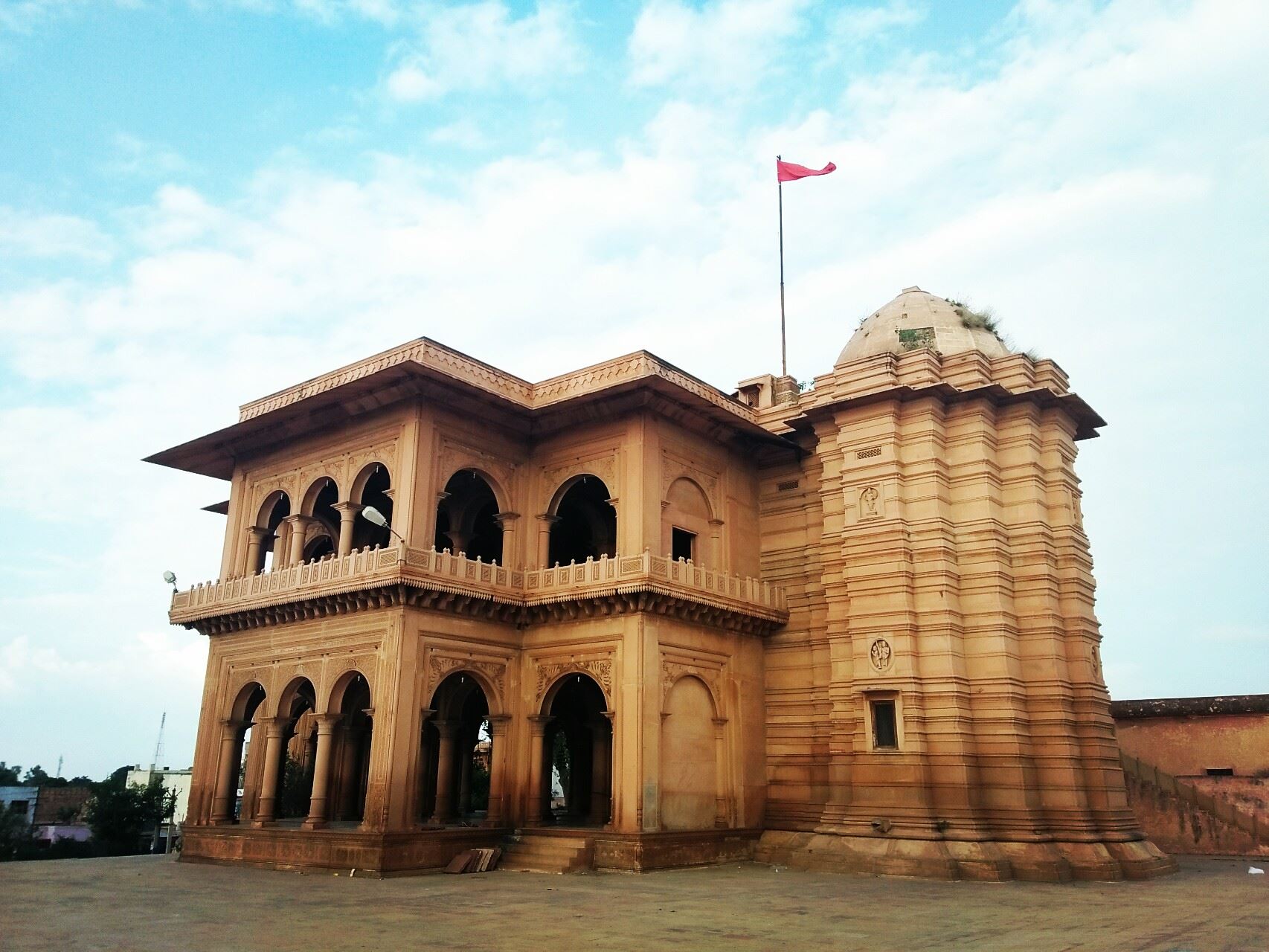
Situated in the bustling heart of Bharatpur city, Ganga Mandir is an architectural masterpiece and a deeply revered spiritual landmark that stands apart from typical Rajasthani temples. Unlike many ancient temples built in the traditional Nagara style, the construction of Ganga Mandir began in 1845 under the patronage of Maharaja Balwant Singh and took nearly a century to complete, with contributions funded entirely by the nobles, merchants, and citizens of Bharatpur. This unique collaborative funding gives the temple a special place in the hearts of the local populace, who consider it a community creation dedicated to Goddess Ganga.
The temple is a stunning amalgamation of diverse architectural styles, featuring intricate carvings that blend Rajput, Mughal, and South Indian temple architecture. Built entirely from white sandstone, the exterior and interior facades are adorned with exquisitely sculpted figures of Hindu gods, goddesses, celestial dancers, and floral motifs. The sanctum sanctorum houses a magnificent, life-sized deity of Goddess Ganga carved out of pure white marble, standing atop a sacred crocodile, accompanied by idols of other major Hindu deities. The towering spires, delicate jali work (perforated stone screens), and expansive courtyard create an atmosphere of immense peace and divine grace amidst the bustling marketplace surrounding it.
Visiting Ganga Mandir offers travelers a glimpse into the living religious traditions and fine craftsmanship of Bharatpur. The best time to experience the temple is during the early morning or late evening aarti (prayer) ceremonies, when the sanctum glows with the warm light of brass lamps and the air fills with soulful devotional chants and the fragrance of incense. It is a wonderful spot to pause, admire intricate stone artistry, and interact with warm local devotees who are always eager to share stories about the temple's century-long construction history.
Key Highlights
- Magnificent white sandstone architecture blending multiple design styles.
- Exquisite marble idol of Goddess Ganga in the main sanctum.
- Intricate pillar carvings and delicate stone lattice (jali) work.
- Vibrant spiritual atmosphere during morning and evening aarti rituals.
Quick Information
- Timings: 6:00 AM to 8:30 PM on all days.
- Entry Fee: Free entry for all visitors.
- Recommended Duration: 45 minutes to 1 hour.
5. Deeg Palace

Located about 32 kilometers from Bharatpur city, Deeg Palace served as the luxurious summer resort of the Jat rulers of Bharatpur. Built in 1772 by Maharaja Badan Singh, this sprawling royal retreat was strategically designed to offer a cool, opulent sanctuary away from the scorching desert heat of Rajasthan. Unlike the formidable and rugged Lohagarh Fort, Deeg Palace is a vision of delicate elegance, symmetrical garden design, and masterful hydraulic engineering. The palace complex is nestled between two large water bodies—the Gopal Sagar and Keshav Sagar tanks—which help naturally cool the surrounding air and supply water to the palace's legendary fountains.
The palace architecture is a breathtaking fusion of Rajput and Mughal styles, featuring spacious marble courtyards, graceful pillared verandahs, arched gateways, and exquisite pavilions named after Hindu months, such as Gopal Bhavan, Suraj Bhavan, and Nand Bhavan. One of the most astonishing engineering feats of Deeg Palace is its elaborate system of fountains. On special occasions, hundreds of fountains surrounding the main courtyards are simultaneously activated using a complex underground water reservoir system, creating a mesmerizing artificial monsoon effect that cools the marble pavilions in a matter of minutes.
A visit to Deeg Palace feels like stepping into a royal fairy tale. The rooms are adorned with delicate marble lattice screens, carved brackets, and remnants of old frescoes. A small museum inside the complex displays royal artifacts, carpets, and old furniture used by the monarchs. Deeg is easily accessible as a half-day trip from Bharatpur city and provides an exceptionally peaceful, uncrowded sightseeing experience that rivals the more famous palaces of Jaipur and Udaipur.
Key Highlights
- Ingenious 18th-century fountain system that creates an artificial cooling monsoon effect.
- Exquisite marble pavilions like Gopal Bhavan and Suraj Bhavan.
- Stunning symmetrical gardens flanked by large royal water tanks.
- Splendid fusion of Rajput and Mughal architectural aesthetics.
Quick Information
- Timings: 9:00 AM to 5:00 PM (Closed on Fridays).
- Entry Fee: Nominal fee for domestic and international tourists.
- Recommended Duration: 2 to 3 hours.
Best Time to Visit Bharatpur
The ideal time to explore Bharatpur is during the winter season, spanning from October to March. During these months, the weather is pleasantly cool, with daytime temperatures hovering comfortably between 10°C and 25°C, making it perfect for outdoor exploration, fort walks, and long hours of bird watching at Keoladeo National Park. This period also coincides with the arrival of massive flocks of migratory birds from Siberia and Central Asia, offering wildlife enthusiasts the peak birding experience. Summers (April to June) are intensely hot and dry, with temperatures often soaring above 45°C, making daytime sightseeing exhausting. The monsoon season (July to September) brings moderate rainfall, reviving the greenery of the wetlands, though winter remains the undisputed favorite season for travelers.
How to Reach Bharatpur
Bharatpur boasts excellent connectivity via road, rail, and air, making it easily accessible from major Indian cities like New Delhi, Agra, and Jaipur.
- By Air: The nearest major airport is Agra Airport (AGR), located about 55 kilometers away, though it has limited flight connectivity. The closest major international airport is Indira Gandhi International Airport (DEL) in New Delhi, situated approximately 220 kilometers from Bharatpur. Taxis and buses are readily available from Delhi airport to reach Bharatpur.
- By Rail: Bharatpur Junction (BTE) is a major railway station on the Delhi-Mumbai and Delhi-Agra rail routes. It is exceptionally well-connected by superfast and express trains from New Delhi, Agra, Jaipur, Mumbai, and Mathura.
- By Road: Bharatpur sits on National Highway 21 (formerly NH 11), ensuring smooth connectivity by road. Regular state-run buses, luxury Volvo coaches, and private cabs operate frequently from Delhi, Agra, Jaipur, and Mathura.
Local Food to Try in Bharatpur
Culinary experiences in Bharatpur reflect the robust, rustic flavors of the Brij region, blending traditional Rajasthani spices with influences from neighboring Uttar Pradesh. When exploring the local food scene, make sure to try these authentic regional delicacies:
- Brijwasi Kachori & Samosa: Flaky, deep-fried pastries stuffed with spicy lentils or potatoes, typically served piping hot with tangy tamarind and spicy mint chutneys.
- Dal Baati Churma: The quintessential Rajasthani masterpiece featuring hard wheat rolls baked over coal fire, served with rich lentil curry and sweetened crushed wheat.
- Ker Sangri: A traditional desert delicacy made from wild berries (ker) and beans (sangri) cooked with local spices in mustard oil.
- Bedmi Puri with Aloo Sabzi: Crispy, spiced urad dal-stuffed puris served alongside a steaming, aromatic potato curry—a beloved local breakfast staple.
- Rabri and Malpua: For sweet tooth cravings, head to local sweet shops in the main bazaar to enjoy crispy fried pancakes soaked in sugar syrup, paired with thickened, sweetened condensed milk (rabri).
10 Essential Travel Tips for Bharatpur
- Book Bird Sanctuary Tickets Online: To avoid long queues at Keoladeo National Park, consider booking your entry tickets through official tourism portals if available.
- Hire Licensed Guides: Always hire certified nature guides inside Keoladeo National Park for deep insights into avian species and conservation efforts.
- Carry Binoculars and Telephoto Lenses: Wildlife viewing requires patience; a good pair of binoculars or a DSLR with a zoom lens is indispensable.
- Dress in Layers (Winter): Early mornings inside the bird sanctuary can be freezing during peak winter, so pack adequate woolens, scarves, and jackets.
- Wear Comfortable Walking Shoes: Exploring Lohagarh Fort, Deeg Palace, and park trails involves extensive walking on uneven terrain.
- Respect Local Customs: Dress modestly when visiting religious sites like Ganga Mandir and historic temples.
- Stay Hydrated: Always carry a reusable water bottle, especially if you visit during the shoulder months of October or March.
- Eco-Friendly Travel: Plastics and loud noises are strictly prohibited inside Keoladeo National Park. Maintain silence and respect wildlife habitats.
- Cash is King: While major hotels accept digital payments, keep sufficient cash handy for rickshaw rides, local street food vendors, and small souvenir shops.
- Plan Day Trips Wisely: Deeg Palace is 32 km away; allocate a dedicated half-day for it to avoid rushing through your itinerary.
Suggested 2-Day Bharatpur Itinerary
Maximize your weekend getaway with this well-paced, practical 2-day travel itinerary:
Day 1: Wildlife Wonders & Royal History
- 06:30 AM – 10:30 AM: Start your morning bright and early with an immersive cycle-rickshaw tour of Keoladeo National Park. Spot migratory birds, deer, and stunning sunrise marsh vistas.
- 11:00 AM – 12:30 PM: Enjoy a hearty local breakfast of Bedmi Puri and hot tea near the city center.
- 01:00 PM – 03:30 PM: Explore the impregnable ramparts and historical palaces of Lohagarh Fort.
- 03:30 PM – 05:00 PM: Step into the Government Museum Bharatpur located inside the fort complex to discover ancient sculptures and royal armories.
- 06:00 PM – 07:30 PM: Witness the divine evening aarti at the magnificent white marble Ganga Mandir and sample local street sweets.
Day 2: Architectural Splendor & Departure
- 08:00 AM – 09:00 AM: Relish a traditional Rajasthani breakfast of stuffed parathas or kachoris.
- 09:30 AM – 01:00 PM: Take a scenic morning drive to Deeg Palace (32 km from Bharatpur) to explore its breathtaking royal pavilions, formal gardens, and historic fountains.
- 01:30 PM – 02:30 PM: Savor a traditional thali lunch featuring authentic Brij delicacies at a local restaurant in Bharatpur.
- 03:00 PM onwards: Pick up souvenirs, local sweets, and handicrafts from the central bazaar before heading to the Bharatpur railway station or bus stand for your onward journey.
Frequently Asked Questions (FAQs)
- Q1: What is Bharatpur famous for?
- Bharatpur is globally famous for Keoladeo National Park (a UNESCO World Heritage Site and bird sanctuary) and the historic, undefeated Lohagarh Fort.
- Q2: How many days are sufficient to explore Bharatpur?
- A 2-day trip is ideal to thoroughly explore the bird sanctuary, historical forts, local temples, and take a half-day trip to Deeg Palace.
- Q3: Can we take our own car inside Keoladeo National Park?
- No, private motor vehicles are not allowed inside the national park. Visitors must explore on foot, rent bicycles, or hire eco-friendly cycle-rickshaws.
- Q4: Is Bharatpur safe for solo and family travelers?
- Yes, Bharatpur is an extremely safe, welcoming destination for families, solo backpackers, and couples alike.
- Q5: What is the distance between Agra and Bharatpur?
- Agra is located approximately 55 kilometers from Bharatpur, making it a convenient 1-hour drive or short train journey.
- Q6: Are guides easily available at the bird sanctuary and Lohagarh Fort?
- Yes, authorized government guides and nature experts are readily available at the ticket counters of both locations.
- Q7: What kind of clothes should I pack for Bharatpur in winter?
- Pack heavy woolens, jackets, gloves, and caps for chilly early morning bird-watching sessions, and comfortable cotton layers for daytime sightseeing.
- Q8: Can we spot tigers in Bharatpur?
- No, Keoladeo National Park is primarily a wetland sanctuary famous for avian fauna, deer, and jackals, not tigers. For tiger safaris in Rajasthan, Ranthambore is the designated destination.
Conclusion
Bharatpur is a destination that rewards curious travelers with a rare blend of pristine ecological wonders and heroic Rajput heritage. Whether you find yourself spellbound by the tranquil expanse of Keoladeo National Park echoing with the calls of rare migratory birds, or standing in awe before the indomitable mud walls of Lohagarh Fort, this historic district leaves an indelible mark on your soul. Far removed from the overwhelming tourist crowds of larger commercial cities, Bharatpur invites you to experience authentic Rajasthani culture, architectural grandeur, and natural serenity at your own relaxed pace. So pack your bags, lace up your walking shoes, and set out to discover the timeless charm of Bharatpur on your next getaway!



0 Comments